
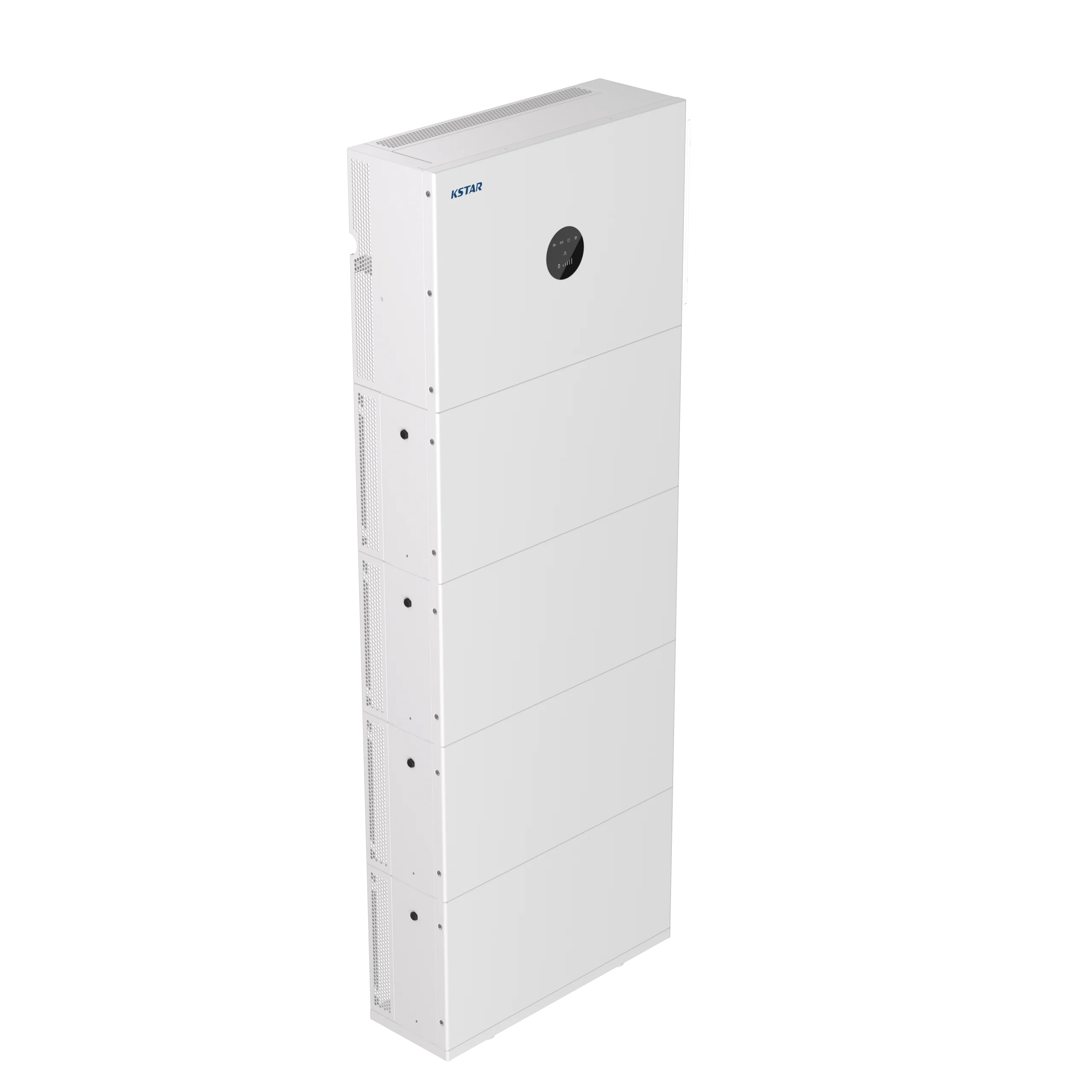
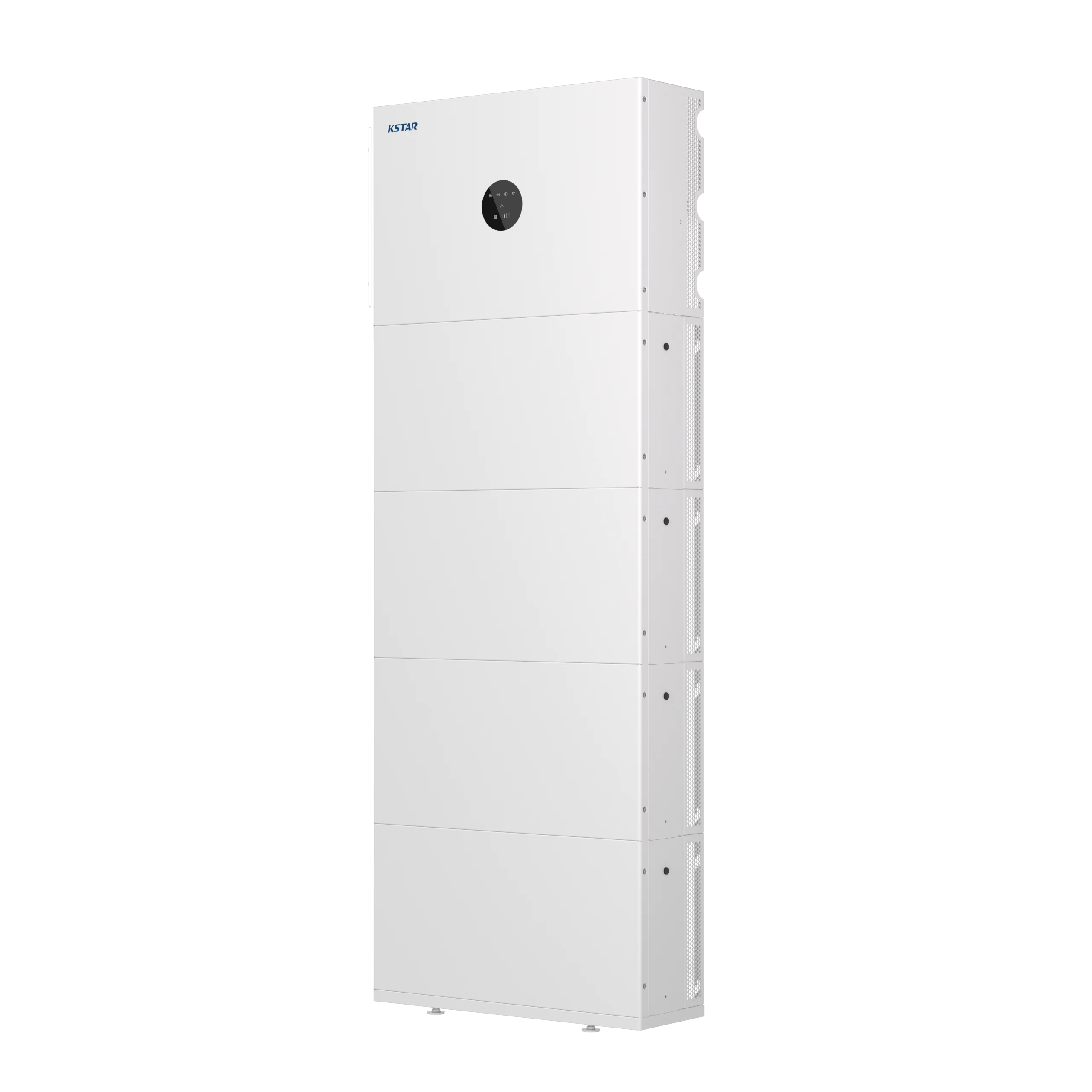
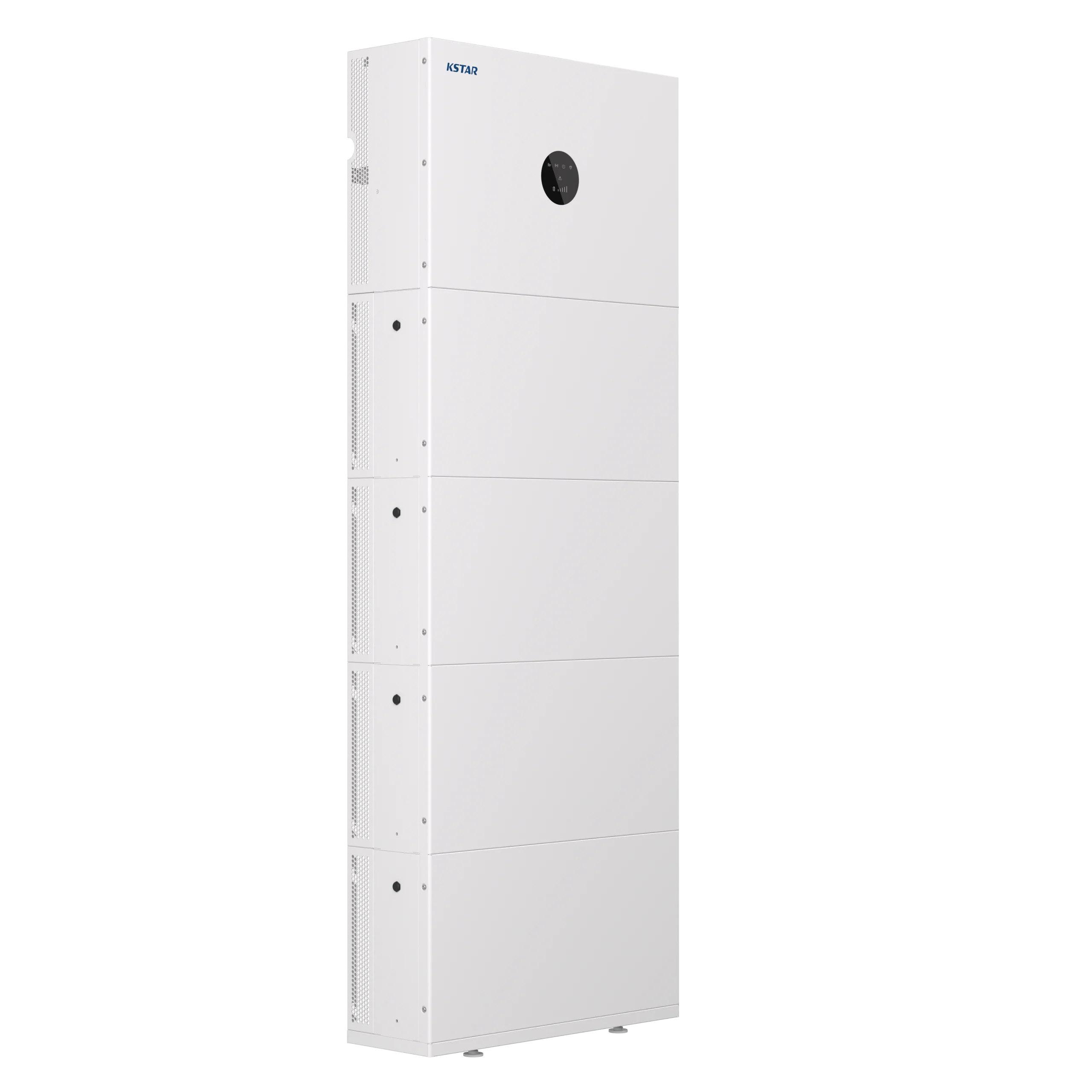
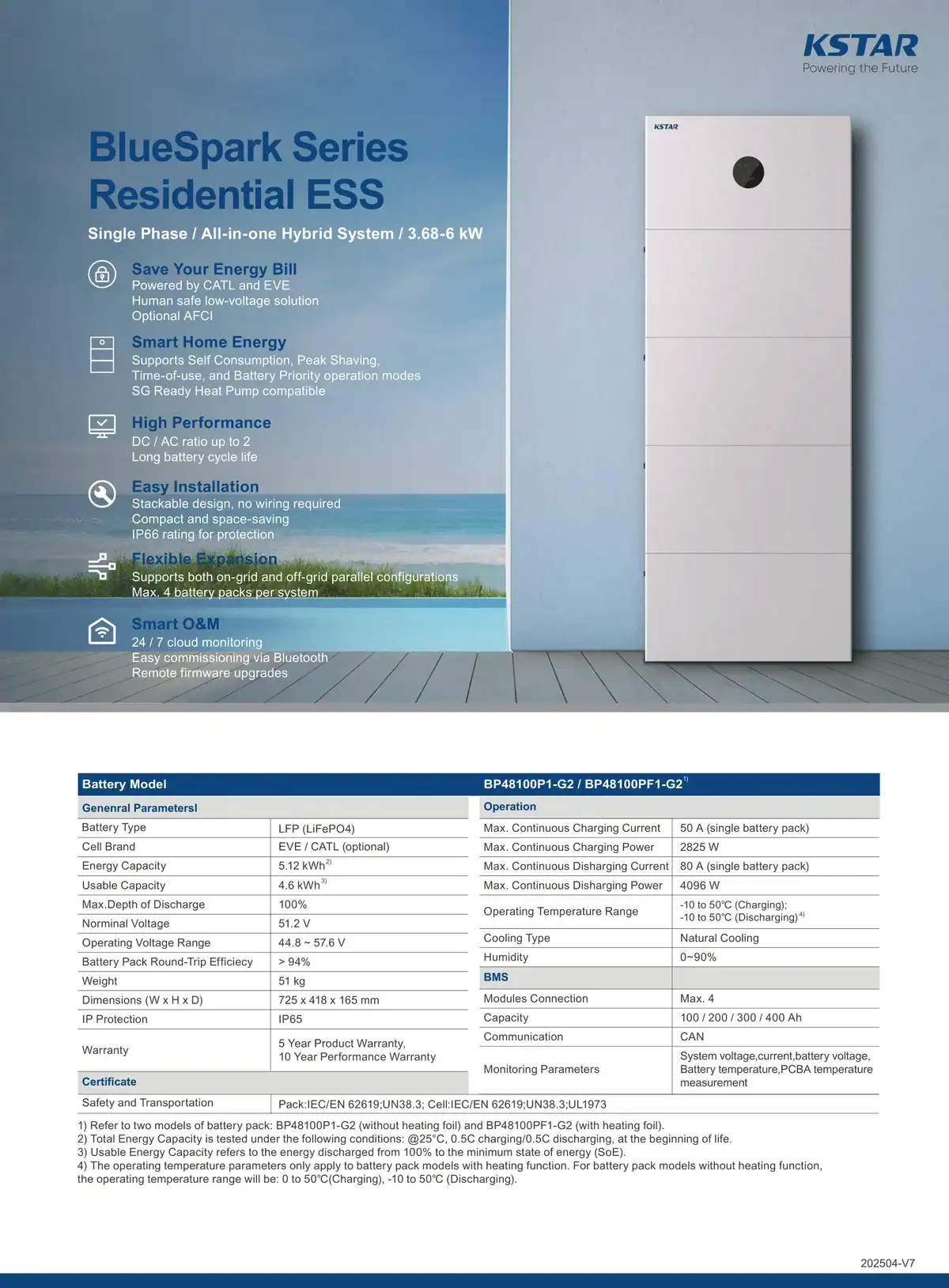
The KSTAR BlueSpark single-phase residential ESS is a complete all-in-one home energy storage system for single-phase EAC connections. Hybrid inverter and stackable battery modules in a single unit — choose the inverter (5 or 6 kW) and the battery size (1 to 4 modules of 5.12 kWh LFP). CATL or EVE cells, 5-year product / 10-year performance warranty, IP66 outdoor-rated, certified to EN 50549, VDE 4105, G98/G99, C10/C11 and CEI-021 European grid codes. Supplied across Cyprus by CGP Solar.
✓ VAT included · Delivery in Cyprus
What It Is
The price on this page is for the KSTAR BlueSpark single-phase hybrid inverter unit (E5KS-D22 or E6KS-D22). The stackable battery modules (KSTAR BluE-Pack 5.1, 5.12 kWh each) must be purchased separately and added to your configuration. Buy the KSTAR BluE-Pack 5.1 battery module here →
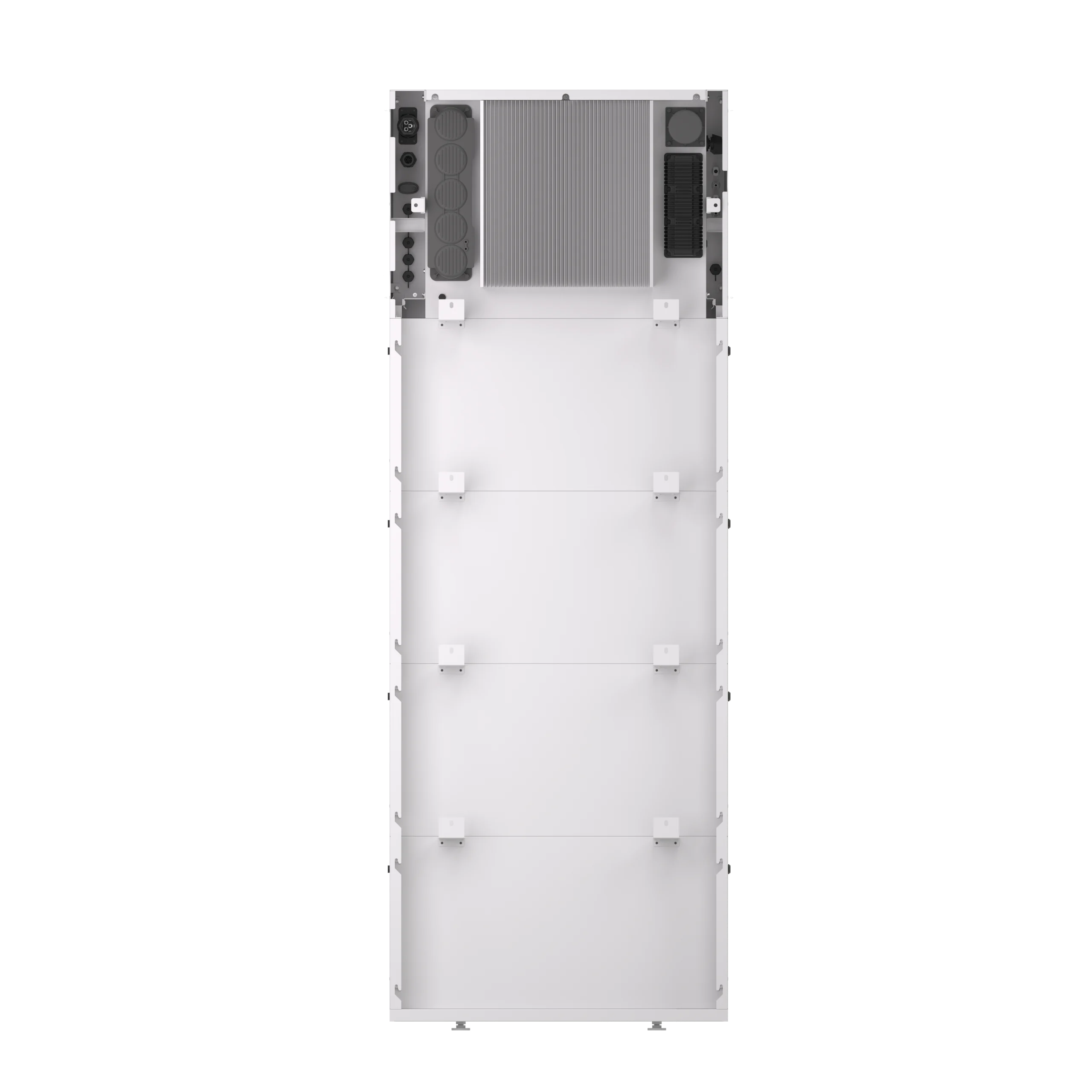
If your home is on a single-phase EAC connection — apartments, town houses, smaller villas and most older Cyprus properties — the KSTAR BlueSpark single-phase residential ESS is built specifically for you. It packages a single-phase hybrid inverter and one to four 5.12 kWh LFP battery modules into one vertical tower that bolts to a wall or stands on a floor. There is no separate battery cabinet, no AC-coupled retrofit kit, no third-party EMS to integrate. CGP Solar ships it pre-matched as one system, sized to your home’s load profile.
Inside the KSTAR BlueSpark single-phase residential ESS, the inverter talks to the battery stack over KSTAR’s own integrated BMS and EMS, with cloud monitoring active 24/7 from the day of commissioning. Capacity is genuinely modular: 5.12 kWh with one module, 10.24 kWh with two, 15.36 kWh with three, 20.48 kWh at the four-module maximum. You can start with one or two modules today and add more as your appliance mix changes — the BMS auto-detects every new pack without any reconfiguration.
Cell Manufacturer
Powered by CATL and EVE — both Tier-1 cell brands
The KSTAR BlueSpark single-phase residential ESS uses cells from one of two named Tier-1 manufacturers: CATL, the world’s largest LFP cell producer (the same cells inside utility-scale energy storage worldwide), or EVE Energy, a top-three global LFP supplier. Which brand ships in your specific delivery depends on factory stock at the time of order — CGP Solar can confirm.
Cyprus throws a lot at residential equipment: 40+ °C summer afternoons, salty air near the coast, occasional heavy winter rain, and the occasional dust storm from across the Mediterranean. The KSTAR BlueSpark single-phase residential ESS hybrid inverter handles all of it. The inverter is rated IP66 (the highest practical outdoor rating — dustproof and protected against powerful water jets), the battery modules are IP65, and the operating range runs −25 °C to +60 °C with derating only kicking in above 45 °C. That means you can install it outside on a wall, in an unconditioned garage, or in a utility room without any climate-control budget.
Many residential storage products use third-party EMS overlays that need configuration after the install and break when firmware updates. The KSTAR BlueSpark single-phase residential ESS doesn’t work that way: KSTAR’s own BMS and EMS are factory-integrated and ship with four operating modes ready to pick from on day one — self-consumption (maximise the use of your solar), peak shaving (avoid drawing from the grid during expensive hours), time-of-use (cycle the battery against the EAC tariff schedule), and battery priority (keep the battery topped up first). Setup happens over Bluetooth in about ten minutes from a smartphone, and the KSTAR cloud app handles long-term monitoring. Communication ports include RS485, CAN 2.0 and built-in WIFI for any third-party home automation you want to add later.
See It In Action
KSTAR’s product team shot a short video tour of the BlueSpark Series tower — the inverter face, the stacked battery design, the wall-mount footprint and the on-screen interface. The video covers the whole BlueSpark range (both single-phase and three-phase), but the form factor and core hardware shown are the same as what you’d receive for the 5/6 kW single-phase model.
For the manufacturer’s published specifications, certifications and the official brochure PDF, KSTAR maintains a dedicated product page for the KSTAR BlueSpark single-phase residential ESS 3.68–6 kW range:
Who This Is For
Not every storage system suits every home. The KSTAR BlueSpark single-phase residential ESS is at its best in homes where the EAC supply is single-phase and the peak demand sits below ~6 kW — that covers a large share of Cyprus housing stock. The grid below shows the situations CGP Solar most often recommends this product for.
Why It Stands Out
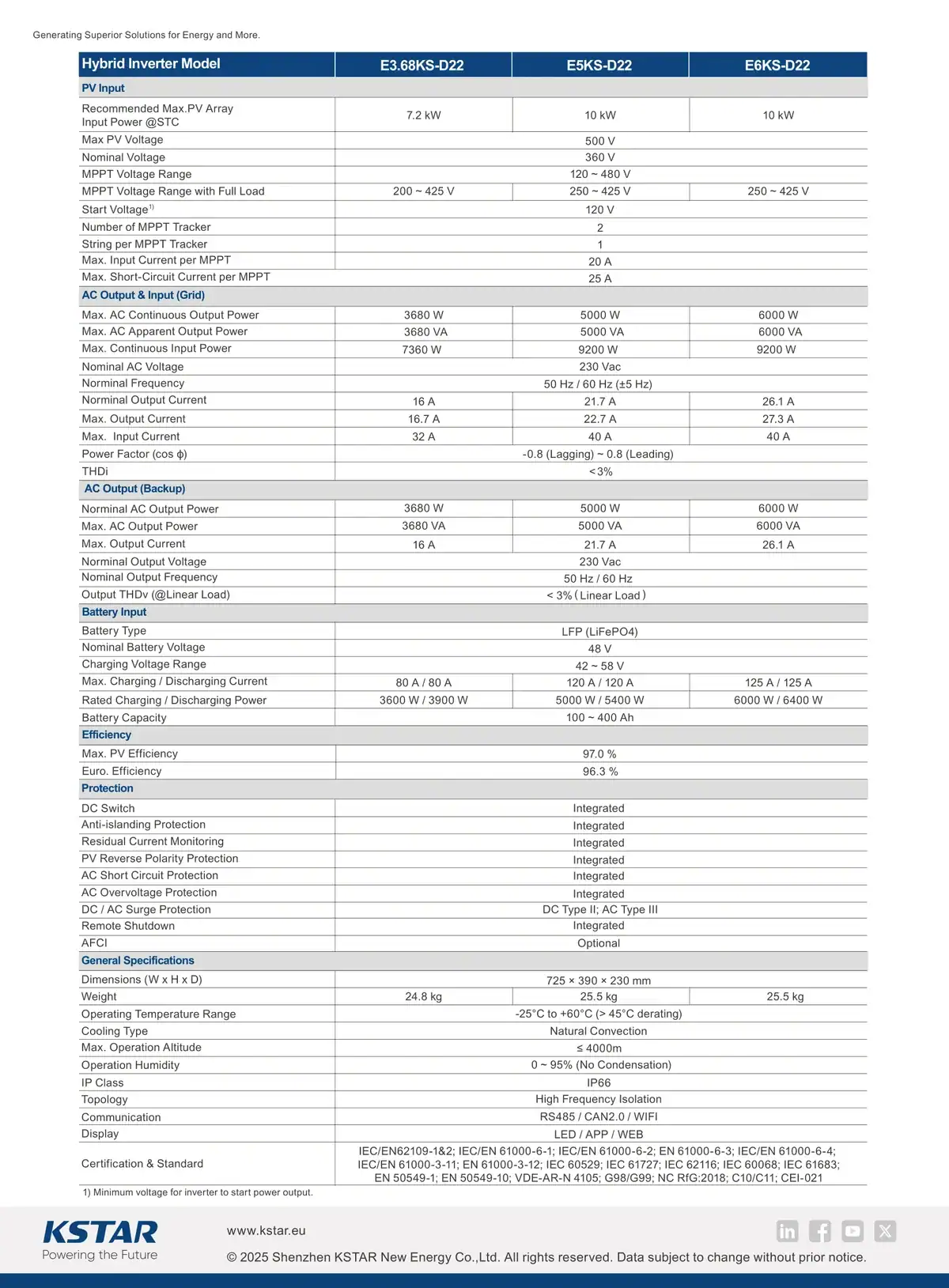
Inverter efficiency is where solar yield gets lost or saved. The KSTAR BlueSpark single-phase residential ESS posts 97.0% at peak and 96.3% on the European weighted measure — the latter is the number that matters in practice because it averages performance across the partial loads inverters actually run at most of the time. Together with the wide 120–480 V MPPT range, this means a wider band of string sizes work without compromise, and very little of your PV generation gets lost to conversion overhead across a full year.
Where most residential hybrid inverters use a transformerless design (lighter, cheaper, slightly higher efficiency), the KSTAR BlueSpark single-phase residential ESS uses high-frequency isolation. There’s a small high-frequency transformer between the DC side (PV + battery) and the AC side (grid + home), creating a galvanic barrier. The practical upshot: any fault current from the PV array can’t reach the grid through a direct DC path, and installations in countries with stricter isolation requirements (Italy and parts of Belgium, where the page is also CEI-021 and C10/C11 certified) work without compromise.
KSTAR caps the recommended PV array at 10 kWp on both the E5KS-D22 and the E6KS-D22 (verified on the V7 datasheet). That’s a 2:1 DC-to-AC ratio on the 5 kW model and 1.67:1 on the 6 kW — both at the upper end of what’s allowed in the residential class. The reason for oversizing PV against the inverter is straightforward: you clip a few hours of midsummer noon peak but capture significantly more energy across mornings, evenings, winter days and cloudy weather. The economics favour oversizing in Cyprus, where the inverter is the bottleneck at midday but rarely so the rest of the time.
The hybrid inverter (725 × 390 × 230 mm, 25.5 kg) sits on top of one to four 5.12 kWh battery modules (725 × 418 × 165 mm, 51 kg each), all connected through integrated busbars. There’s no commissioning step involving cable terminations between modules, no separate communication harness to BMS-detect, and no possibility of getting the polarity wrong on day one. The whole stack occupies roughly the same wall footprint as a standard washing machine.
Each BluE-Pack 5.1 module in the KSTAR BlueSpark single-phase residential ESS holds 5.12 kWh nominal energy with 4.6 kWh usable (≈ 90%). The cells are rated for 100% Depth of Discharge, which the BMS still throttles back to ~90% to protect cycle life. Round-trip efficiency runs above 94%. The inverter supports a maximum of four modules per stack per V7 datasheet — so the KSTAR BlueSpark single-phase residential ESS tops out at 20.48 kWh total / 18.4 kWh usable.
KSTAR publishes three official wiring topologies for the KSTAR BlueSpark single-phase residential ESS , and the right one depends on what’s already on your roof. New install with no panels yet? Existing PV inverter you want to keep? PV array you’re expanding alongside adding storage? Each scenario is below, with the same shared elements at the grid end: a CT clamp measuring import/export at the meter, a feed to normal household loads, a separate backup-loads circuit that keeps running through a grid outage, and a LAN link to the KSTAR cloud for monitoring.
Topology 1 · New Install
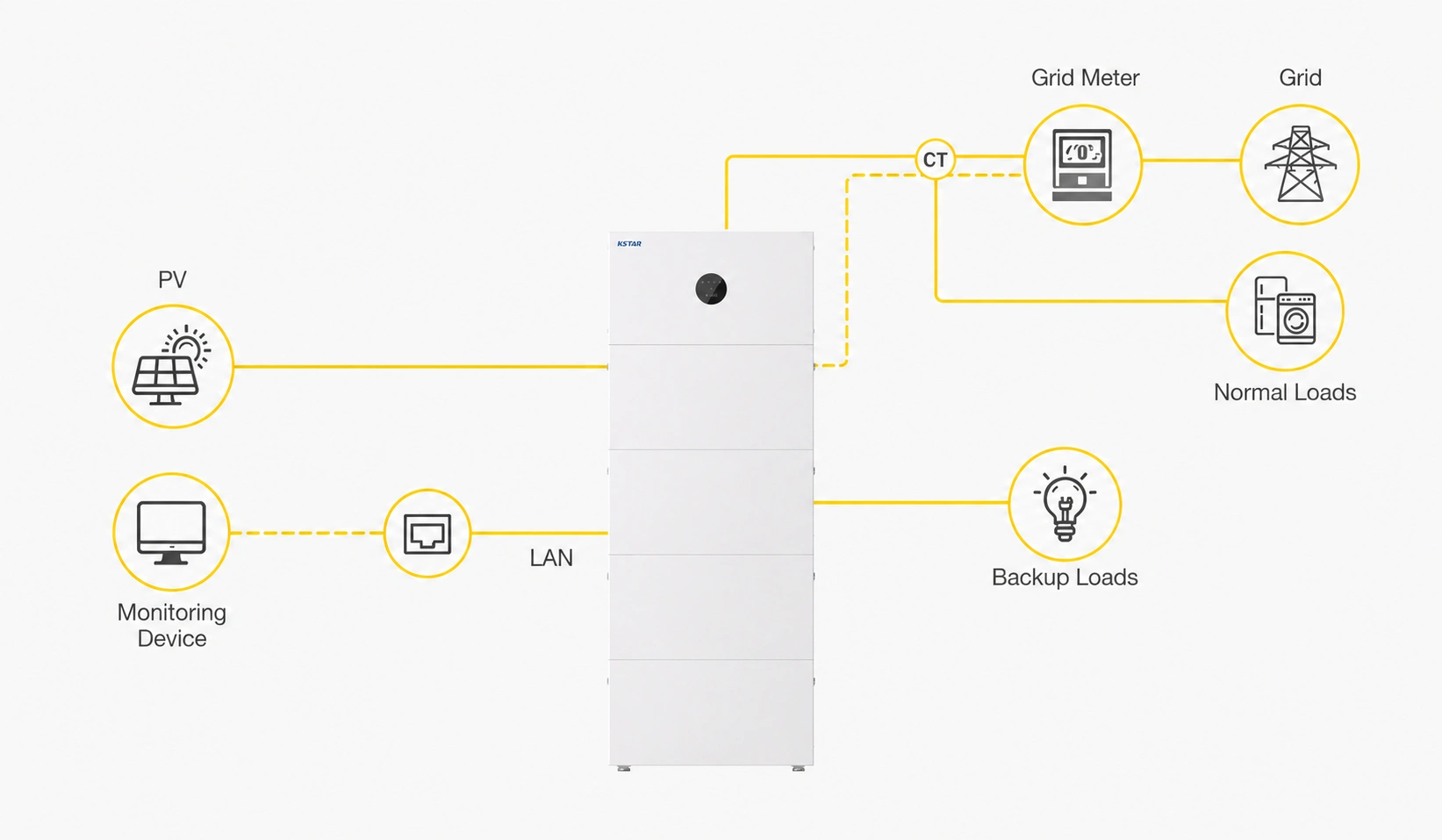
The cleanest design and the natural choice when you’re installing solar and storage at the same time. PV panels feed directly into the KSTAR BlueSpark single-phase residential ESS two built-in MPPT trackers — no upstream PV inverter, no AC-coupling losses. The KSTAR BlueSpark single-phase residential ESS does everything in one box: PV-to-AC conversion, battery charging and discharging, switching between on-grid and backup mode.
Topology 2 · Expansion
For homes already running PV that now want both additional panels and battery storage. Keep the existing PV inverter, route new panels straight into the BlueSpark.
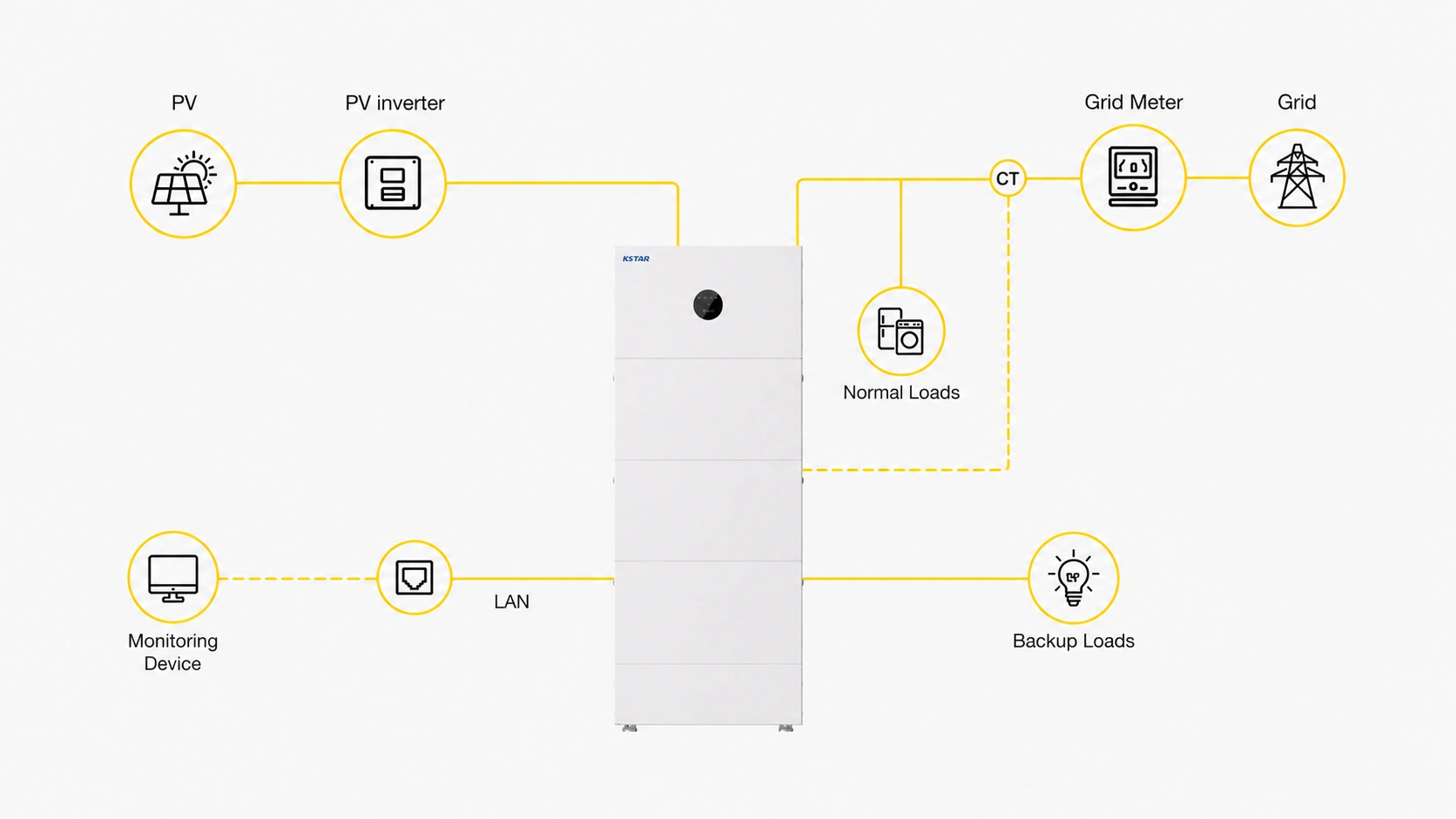
Useful when there’s an undersized PV system on the roof already and you want to add capacity at the same time as adding storage. The original PV array stays AC-coupled through its existing inverter, while a new section of PV panels connects to the KSTAR BlueSpark single-phase residential ESS on the DC side. The CT clamp at the meter sees the combined import/export from both sources.
Topology 3 · Retrofit
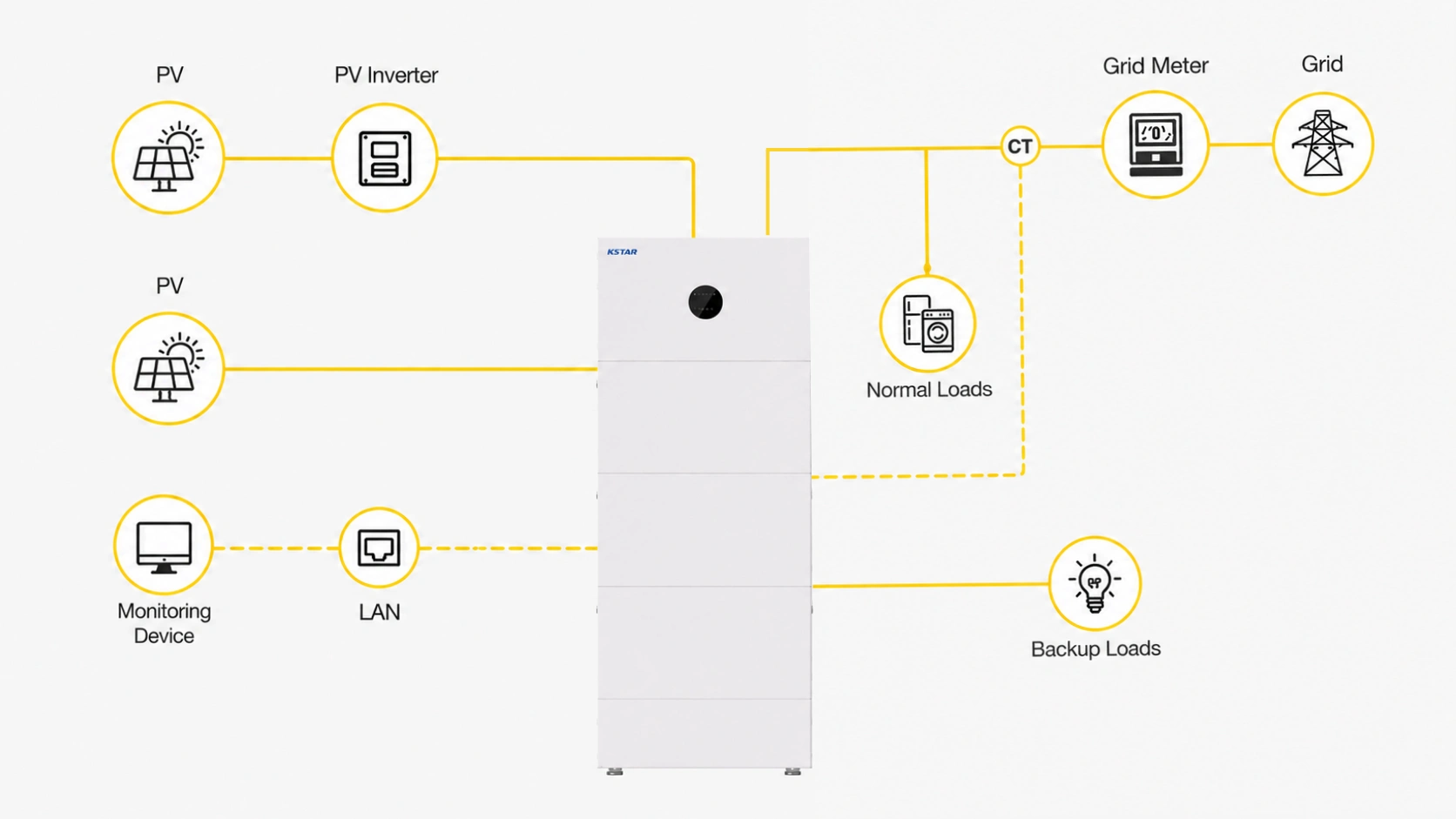
The right choice when a working PV system is already in place and the only thing missing is storage. The KSTAR BlueSpark single-phase residential ESS connects to the AC side of the house only — it charges from PV surplus via the grid-side connection and discharges into household loads or backup loads when the grid drops. Whatever PV inverter is on the wall stays exactly as it is.
The three diagrams show the official KSTAR-published wiring topologies for the BlueSpark Series. CGP Solar engineers confirm the right topology after a site survey — picking the wrong one for your situation costs you money and time, picking the right one means a clean install with no surprises on day one.
If your EAC connection is three-phase (common in newer or larger Cyprus family homes), the topologies stay the same but you’ll want the three-phase BlueSpark variant. Head over to our KSTAR BlueSpark three-phase residential ESS page for the 8–12 kW range, which scales up to 40.96 kWh of battery storage.
With two inverter sizes and four possible battery stack heights, there are eight KSTAR BlueSpark single-phase residential ESS configurations CGP Solar can quote. The simple rule: the inverter is sized by your home’s peak load and PV array, and the battery is sized by how much energy you typically consume in the evening. Below is a starting-point sizing table — CGP Solar refines this against your last 12 months of EAC bills before quoting.
|
Typical Home Profile
|
Recommended Inverter
|
Recommended Battery
|
Max PV
|
Evening kWh covered
|
|---|---|---|---|---|
|
Small apartment · low demand
|
5 kW
|
1 module · 5.12 kWh
|
10 kWp
|
~4.6 kWh usable
|
|
Small home · 1–2 bedroom
|
5 kW
|
2 modules · 10.24 kWh
|
10 kWp
|
~9.2 kWh usable
|
|
Standard family home
|
5 kW
|
3 modules · 15.36 kWh
|
10 kWp
|
~13.8 kWh usable
|
|
Family home + AC + heat pump
|
6 kW
|
3 modules · 15.36 kWh
|
10 kWp
|
~13.8 kWh usable
|
|
Family home · max self-sufficiency
|
6 kW
|
4 modules · 20.48 kWh
|
10 kWp
|
~18.4 kWh usable
|
|
Holiday home · long backup autonomy
|
5 kW
|
4 modules · 20.48 kWh
|
10 kWp
|
~18.4 kWh usable
|
Usable kWh figures assume ~90% Depth of Discharge (4.6 kWh per 5.12 kWh module). Real-world evening cover depends on which appliances are running and when. The “max self-sufficiency” configurations cover most Cyprus single-phase homes through to morning, even with heat-pump heating active overnight.
Backup Power
Cyprus has grid outages. They aren’t frequent, but they happen, and when the wind is up or a substation fault rolls through, you want lights, fridge and Wi-Fi to keep working. The BlueSpark single-phase ESS handles this automatically: the moment grid voltage falls, the inverter cuts over to its dedicated backup AC port and keeps the backup-loads circuit alive from the battery (or from PV plus battery during daylight). No diesel generator, no manual switching. Backup output mirrors the inverter rating:
|
Inverter
|
Nominal Backup
|
Max Apparent
|
Backup Current
|
Voltage
|
|---|---|---|---|---|
|
E5KS-D22
|
5 kW
|
5 kVA
|
21.7 A
|
230 Vac · single-phase
|
|
E6KS-D22
|
6 kW
|
6 kVA
|
26.1 A
|
230 Vac · single-phase
|
Runtime depends entirely on what’s actually drawing power during the outage. The figures below assume the largest single-phase setup CGP Solar typically sells — a 6 kW inverter paired with all four battery modules (20.48 kWh nominal, around 18.4 kWh usable). Drop one module to see roughly 75% of these numbers, two modules for 50%, and so on.
Runtime scales linearly with module count. At the four-module ceiling (20.48 kWh nominal, ~18.4 kWh usable), an average Cyprus single-phase home covers a full overnight outage with margin to spare — well beyond what any realistic EAC interruption demands.
The grid-to-backup transition is built into the BlueSpark inverter itself. There’s no external automatic transfer switch (ATS) to install, no time-delay between grid loss and battery feed beyond the inverter’s own millisecond-scale changeover. In practical terms, the lights stay on, your fridge doesn’t cycle, the router stays connected — most household equipment doesn’t notice a single-phase grid drop at all.
Net Billing Cyprus
From 1 January 2026, Cyprus replaced the long-running net-metering scheme with net billing for all new residential PV installations. The change has direct, measurable consequences for any home installing solar from now on — and storage is no longer optional if you want the same economics you would have had under the old scheme.
Storage is the lever. Under net billing, the most valuable kWh on your roof is the one you generate at noon and use yourself at 8 pm — not the one you generate at noon and export at the wholesale rate. The KSTAR BlueSpark single-phase residential ESS is built to maximise that pattern: KSTAR’s EMS ships with four operating modes, and self-consumption mode is the default for net-billing-era installations. It fills the battery from solar surplus during the day, then discharges to cover evening household demand from the moment retail rates start applying. With up to 20.48 kWh of LFP storage (4 modules of 5.12 kWh), the typical Cyprus single-phase home shifts most of its PV generation into self-consumption rather than wholesale-rate export.
For a fuller explanation of the 2026 net billing scheme — how it works, what it replaces, what to plan for — read our dedicated CGP Solar guide: Net Billing Cyprus 2026 — the full breakdown →
|
Battery Model
|
BP48100P1-G2
|
|---|---|
|
General Parameters
|
|
|
Battery Type
|
LFP (LiFePO4)
|
|
Cell Brand
|
EVE / CATL (optional)
|
|
Energy Capacity
|
5.12 kWh
|
|
Usable Capacity
|
4.6 kWh
|
|
Max.Depth of Discharge
|
100%
|
|
Nominal Voltage
|
51.2 V
|
|
Operating Voltage Range
|
44.8 ~ 57.6 V
|
|
Battery Pack Round-Trip Efficiecy
|
> 94%
|
|
Weight
|
51 kg
|
|
Dimensions (WxHxD)
|
725 x 418 x 165 mm
|
|
IP Protection
|
IP65
|
|
Warranty
|
5 Year Product Warranty
10 Year Performance Warranty |
|
Operation
|
|
|
Max. Continuous Charging Current
|
50 A (single battery pack)
|
|
Max. Continuous Charging Power
|
2825 W
|
|
Max. Continuous Disharging Current
|
80 A (single battery pack)
|
|
Max. Continuous Disharging Power
|
4096 W
|
|
Operating Temperature Range
|
-10 to 50℃ (Charging); -10 to 50℃ (Discharging)
|
|
Cooling Type
|
Natural Cooling
|
|
Humidity
|
0 ~ 90%
|
|
BMS
|
|
|
Modules Connection
|
Max. 8
|
|
Capacity
|
100 / 200 / 300 / 400 / 500 / 600 / 700 / 800 Ah
|
|
Communication
|
CAN
|
|
Monitoring Parameters
|
System voltage,current,battery voltage, Battery temperature,PCBA temperature measuremen
|
|
Certificate
|
|
|
Safety and Transportation
|
Pack:IEC/EN 62619;UN38.3; Cell:IEC/EN 62619;UN38.3;UL1973
|
|
Model Name
|
E5KS-D22
|
E5KS-D22
|
||
|---|---|---|---|---|
|
PV Input
|
||||
|
Recommended Max.PV Array Input Power @STC
|
10 kW
|
|||
|
Max PV Voltage
|
500 V
|
|||
|
Nominal Voltage
|
360 V
|
|||
|
MPPT Voltage Range
|
120 ~ 480 V
|
|||
|
MPPT Voltage Range with Full Load
|
250 ~ 425 V
|
250 ~ 425 V
|
||
|
Start Voltage
|
120 V
|
|||
|
Number of MPPT Tracker
|
2
|
|||
|
Number of MPPT Tracker
|
1
|
|||
|
Max. Input Current per MPPT
|
20 A
|
|||
|
Max. Short-Circuit Current per MPPT
|
25 A
|
|||
|
AC Output & Input (Grid)
|
||||
|
Max. AC Continuous Output Power
|
5000 W
|
6000 W
|
||
|
Max. AC Apparent Output Power
|
5000 VA
|
6000 VA
|
||
|
Max. Continuous Input Power
|
9200 W
|
|||
|
Nominal AC Voltage
|
230 Vac
|
|||
|
Norminal Frequency
|
50 Hz / 60 Hz (±5 Hz)
|
|||
|
Norminal Output Current
|
21.7 A
|
26.1 A
|
||
|
Max. Output Current
|
22.7 A
|
27.3 A
|
||
|
Max. Input Current
|
40 A
|
|||
|
Power Factor (cos ϕ)
|
-0.8 (Lagging) ~ 0.8 (Leading)
|
|||
|
THDi
|
< 3%
|
|||
|
AC Output (Backup)
|
||||
|
Nominal AC Output Power
|
5000 W
|
6000 W
|
||
|
Max. AC Output Power
|
5000 VA
|
6000 VA
|
||
|
Max. Output Current
|
21.7 A
|
26.1 A
|
||
|
Nominal Output Voltage
|
230 Vac
|
|||
|
Nominal Output Frequency
|
50 Hz / 60 Hz
|
|||
|
Output THDv (@Linear Load)
|
< 3%(Linear Load)
|
|||
|
Battery Input
|
||||
|
Battery Type
|
LFP (LiFePO4)
|
|||
|
Nominal Battery Voltage
|
48 V
|
|||
|
Charging Voltage Range
|
42 ~ 58 V
|
|||
|
Max. Charging / Discharging Current
|
120 A / 120 A
|
125 A / 125 A
|
||
|
Rated Charging / Discharging Power
|
5000 W / 5400 W
|
6000 W / 6400 W
|
||
|
Battery Capacity
|
100 ~ 400 Ah
|
|||
|
Efficiency
|
||||
|
Max. PV Efficiency
|
97.0 %
|
|||
|
Euro. Efficiency
|
96.3 %
|
|||
|
Protection
|
||||
|
DC Switch
|
Yes
|
|||
|
Anti-Islanding Protection
|
Yes
|
|||
|
Residual Current Monitoring
|
Yes
|
|||
|
PV Reverse Polarity Protection
|
Yes
|
|||
|
AC Short Circuit Protection
|
Yes
|
|||
|
AC Overvoltage Protection
|
Yes
|
|||
|
DC / AC Surge Protection
|
DC Type II; AC Type II
|
|||
|
Remote Shutdown
|
Yes
|
|||
|
AFCI
|
Optional
|
|||
|
General Parameters
|
||||
|
Dimensions (W x H x D)
|
725 × 390 × 230 mm
|
|||
|
Weight
|
25.5 kg
|
|||
|
Topology
|
High Frequency Isolation
|
|||
|
IP Protection
|
IP66
|
|||
|
Operation Temperature Range
|
-25 ~ 60℃ (> 45℃ Derating)
|
|||
|
Operation Humidity Range
|
0 ~ 95% (No Condensing)
|
|||
|
Cooling Method
|
Natural Convection
|
|||
|
Max. Operation Altitude
|
4000 m
|
|||
|
Communication
|
RS485 / CAN2.0 / WIFI
|
|||
|
Display
|
LED / APP / WEB
|
|||
|
Certification & Standard
|
IEC/EN62109-1&2; IEC/EN 61000-6-1; IEC/EN 61000-6-2; EN 61000-6-3; IEC/EN 61000-6-4; IEC/EN 61000-3-11; EN 61000-3-12; IEC 60529; IEC 61727; IEC 62116; IEC 60068; IEC 61683; EN 50549-1; EN 50549-10; VDE-AR-N 4105; G98/G99; NC RfG:2018; C10/C11; CEI-021
|
|||
Certifications & Standards
The KSTAR BlueSpark single-phase residential ESS ships with a broader certification package than the three-phase model because it covers more national grid codes — Italy (CEI-021), the UK (G98/G99), Belgium (C10/C11) and Germany (VDE-AR-N 4105) all add their own requirements on top of the European IEC/EN baseline.
IEC/EN 62109-1&2 — the foundational electrical-safety standard for PV inverters. Tests electric-shock pathways, fire hazards, mechanical robustness and protective earthing across the full operating envelope.
IEC/EN 61000-6 series — the EMC family. Parts -6-1 and -6-2 are the immunity tests (the inverter must keep operating through electrical noise from outside); parts -6-3 and -6-4 are the emissions tests (the inverter mustn’t disturb other equipment).
IEC 61727 & IEC 62116 — utility-interface standards. 61727 specifies how a PV inverter should behave when connected to a low-voltage public network; 62116 is the dedicated anti-islanding test (the inverter must disconnect within milliseconds when the grid goes down, to protect line workers).
EN 50549-1 / EN 50549-10 — the European generic grid-connection rules for distributed generation under 1 MW. Cyprus’s EAC requires compliance with these for residential PV/storage connection.
VDE-AR-N 4105 — Germany’s national grid code for low-voltage generation up to 50 kVA. Widely treated as the European gold standard for residential inverter behaviour.
G98 / G99 — the UK’s Energy Networks Association grid codes. G98 covers generators up to 16 A per phase, G99 covers everything above. Their presence on the datasheet confirms the BlueSpark can connect anywhere the UK code is in force.
C10/C11 (Synergrid) — Belgium’s residential grid code for generators connecting to the low-voltage public network. Required for residential PV-and-storage installs across Belgium.
CEI-021 — Italy’s national grid-connection standard (CEI 0-21) for low-voltage generation. Italian installs require it, and it’s well-recognised across Southern European markets — Cyprus included by extension.
IEC/EN 62619 — the safety standard for industrial lithium-ion battery systems in stationary applications. Tests both cells and assembled packs for thermal runaway propagation, overcharge resistance and electrical abuse.
UN 38.3 & UL 1973 — UN 38.3 is the global lithium-battery transport standard (the cells can be shipped legally by air, sea or road); UL 1973 is the North American cell-level safety standard for stationary storage.
Inverter Protection
A residential installer’s nightmare is a project that needs three separate external protection boxes bolted to the wall next to the inverter. The KSTAR BlueSpark single-phase residential ESS sidesteps that: every electrical protection a standard Cyprus residential connection requires is built into the inverter cabinet itself.
Physically: IP66 enclosure, natural convection cooling (no fans to fail), 25.5 kg on the wall, 725 × 390 × 230 mm footprint, high-frequency isolation topology. Operating envelope is −25 °C to +60 °C with output derating only beginning above 45 °C — comfortably outside what Cyprus’s climate ever delivers.
Installation Process
Single-phase residential installations are quicker than commercial ones — the inverter is wall-hung in a single afternoon, battery modules click together without inter-pack wiring, and most of the schedule is waiting on EAC paperwork rather than on-site work. A typical end-to-end timeline:
Warranty
Every KSTAR BlueSpark single-phase residential ESS is covered by KSTAR’s official two-part manufacturer warranty:
KSTAR BluePulse C&I ESS · CGP Solar Cyprus
Cyprus moved to net billing on 1 January 2026, which means battery storage is now what makes residential solar economics work. The KSTAR BlueSpark single-phase residential ESS gives you a self-contained, modular, factory-built energy storage system in a footprint roughly the size of a washing machine.
CGP Solar is the authorised KSTAR distributor in Cyprus. We handle the full residential project end-to-end — site visit, system sizing, EAC paperwork, delivery, installation in one day, commissioning over Bluetooth, cloud monitoring activation, and warranty service.
Contact us today to schedule your personalised consultation and discover how the KSTAR BlueSpark single-phase residential ESS in Cyprus can help you start saving on electricity bills.
FAQ’s
Check your EAC meter or the main breaker in your distribution board. A single-phase supply has one live wire plus neutral — typically rated 25 A, 32 A, 40 A or 63 A. A three-phase supply has three live wires plus neutral. If you’re not sure, send CGP Solar a photo of your distribution board and we’ll confirm before any quoting happens. Picking the wrong phase configuration is the single most expensive mistake in residential storage — we’d rather check twice. For three-phase homes, head to our KSTAR BlueSpark three-phase residential ESS page instead.
Which one ships in any specific delivery comes down to KSTAR’s factory stock at the time. Both are Tier-1 LFP cell producers — CATL is the world’s largest manufacturer and the cell brand inside most utility-scale storage projects globally; EVE is consistently in the global top three for LFP. CGP Solar can typically confirm which brand will ship at order confirmation.
For a typical single-phase Cyprus home, yes — the 5 kW or 6 kW inverter with three or four battery modules covers lighting, refrigeration, AC, kitchen appliances and water pumps comfortably through an evening, and most light overnight loads through to morning. Two important caveats: first, the backup output is limited to the inverter’s rating (5 kVA on the E5KS, 6 kVA on the E6KS) — running a heat pump and an electric oven simultaneously may exceed that. Second, runtime obviously depends on what’s drawing power, CGP Solar models real runtime against your specific load profile during the site survey.
Yes — modularity is one of the KSTAR BlueSpark single-phase residential ESS main selling points. You can begin with a single 5.12 kWh module and add up to three more later, taking the system to its 4-module ceiling of 20.48 kWh. The BMS auto-detects every new pack at next power-cycle, so adding a module is plug-and-play. A common pattern: start at the size that covers today’s bills, expand when a heat pump goes in or the family grows.
Yes. The inverter is rated −25 °C to +60 °C, and output derating doesn’t begin until above 45 °C — well above the highest sustained ambient temperatures Cyprus delivers. The IP66 inverter and IP65 batteries handle outdoor mounting, salt air and the occasional dust storm without any additional enclosure.
Two warranties run in parallel: 5 years on the product (covers manufacturing and material defects on the whole system — inverter, batteries, BMS, internals) and 10 years on the battery’s performance (KSTAR guarantees rated capacity retention over normal cycling). As the authorised KSTAR distributor in Cyprus, CGP Solar handles every warranty claim directly — you never need to deal with KSTAR’s customer service in Shenzhen.
The KSTAR BlueSpark single-phase residential ESS tops out at 6 kW / 20.48 kWh. If your home needs more — typically three-phase family homes with heat pumps and EV chargers — the three-phase BlueSpark Series scales to 12 kW / 40.96 kWh: see our KSTAR BlueSpark three-phase residential ESS page. For commercial sites (factories, hotels, larger farms), KSTAR’s BluePulse Series covers 30–125 kW: see the KSTAR BluePulse 30–50 kW commercial ESS page or the larger KSTAR BluePulse 80–125 kW C&I ESS page.
Net billing replaced net metering on 1 January 2026, which means PV-only systems no longer get retail-rate credits for exported energy — they get the wholesale rate (~€0.11/kWh) instead, while still paying retail rates (~€0.25–0.30/kWh) for evening grid imports. That gap is what makes battery storage so valuable now. The BlueSpark single-phase ESS shifts your PV self-consumption from the ~30–40% typical of solar-only homes to 75–85%+, capturing most of the retail-vs-wholesale spread that net billing introduced. For a full explanation, see our Net Billing Cyprus 2026 guide.
| Power output | 5kW, 6kW |
|---|



Visit our show room:
Working hours:
Get in touch:
Find us on:

