


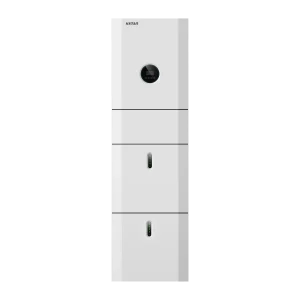
The Sinexcel Isuna Single-Phase LV Hybrid Inverter combines advanced hybrid technology with simple operation. With models ranging from 5 kW to 12 kW, it manages solar power, battery storage, and grid energy in one streamlined unit. The integrated LCD display provides clear, real-time data on system performance, helping users make informed decisions about their energy use day and night.
✓ VAT included · Delivery in Cyprus
What It Is
The Sinexcel Isuna Single-Phase LV Hybrid Inverter is a complete on/off-grid hybrid inverter for homes with a standard single-phase EAC connection. It links your solar panels, your battery and your home’s electrical loads into one unit — and remains connected to the EAC grid when you want it to. Five power variants cover 5 kW, 6 kW, 8 kW, 10 kW and 12 kW, all in the same compact 165 mm-thin enclosure with a built-in LCD display for local monitoring.
Sinexcel was founded in 2007 in Shenzhen and is listed on China’s GEM board (stock code 300693). The company started in industrial power electronics — supplying power quality systems to data centres and hospitals — and the Isuna range carries that engineering rigour into residential solar.
Most residential hybrid inverters use traditional silicon (Si) IGBT semiconductors to convert DC from your panels and battery into AC for your home. The Isuna uses silicon carbide (SiC) semiconductors instead. SiC is a wide-bandgap material that switches much faster, runs cooler, and loses less energy as heat during conversion than conventional silicon.
The practical results that you’ll notice on your installation:
SiC adds cost over standard silicon, which is why most lower-priced hybrid inverters still use IGBTs. The Isuna’s 1–2 percentage point efficiency advantage compounds over the system’s life: at 8 kW running 5 hours/day, that’s roughly 60–120 kWh/year more electricity from the same solar array — direct savings on your EAC bill.
Who This Is For
The Sinexcel Isuna Single-Phase LV Hybrid Inverter is the right fit for these property types in Cyprus:
Sizing Guide
The right kW depends on your annual electricity consumption and your roof area. As a starting point, match your average monthly EAC bill to the recommended Sinexcel Isuna Single-Phase LV Hybrid Inverter model below — our team will refine the recommendation based on your last 12 months of bills and a site survey.
Solar array sizes assume the 150% PV oversizing the inverter permits. The actual size depends on roof orientation, shading and target self-consumption.
|
Average monthly EAC bill
|
Recommended Model
|
Approx. Solar Array
|
Best Match
|
|---|---|---|---|
|
€100 – €180
|
5 kW
|
up to 10 kWp PV
|
Apartments, small homes
|
|
€180 – €280
|
6 kW
|
up to 12 kWp PV
|
Average 3-bedroom homes
|
|
€280 – €400
|
8 kW
|
up to 16 kWp PV
|
Larger homes, modest AC use
|
|
€400 – €600
|
10 kW
|
up to 18 kWp PV
|
Villas with pool / EV
|
|
€600+
|
12 kW
|
up to 18 kWp PV
|
Large villas, small commercial
|
Why It Stands Out
The Sinexcel Isuna Single-Phase LV Hybrid Inverter has three independent maximum power point trackers (MPPTs), each accepting 130–800 V at up to 20 A. Each tracker operates on its own — partial shade, dust or a different roof angle on one string does not reduce the output of the other two. For Cypriot homes with east-west or multi-pitch roofs, this is the feature that makes the difference between a system that performs as designed and one that underdelivers.
The Sinexcel Isuna single-phase LV hybrid inverter can pull 150–340% of its rated power from the grid (max 60 A grid input current), supplying your loads and charging your battery in parallel. In practice this means: when the EAC grid is available and your battery is low, the inverter doesn’t have to choose between powering your home or recharging the battery — it does both at the same time. Useful in winter or after a long outage when you want to top the battery up quickly to be ready for the next event.
|
Model Name
|
Isuna D5K-TL-S
|
Isuna D6K-TL-S
|
Isuna D8K-TL-S
|
Isuna D10K-TL-S
|
Isuna D12K-TL-S
|
|---|---|---|---|---|---|
|
Off-grid Output
|
|||||
|
Rated Output Power
|
5kW
|
6kW
|
8kW
|
10kW
|
12kW
|
|
Max. Output Power
|
5.5kVA
|
6.6kVA
|
8.8kVA
|
11kVA
|
12kVA
|
|
Peak Power & Duration
|
20kVA(10s)*
|
||||
|
Max. Output Current
|
25A
|
30A
|
40A
|
50A
|
54.5A
|
|
Rated Output Voltage
|
L/N/PE, 220V/230V/240V
|
||||
|
Switching Time
|
<10ms
|
||||
|
GEN Max. Current
|
77.3A
|
82A
|
82A
|
82A
|
82A
|
|
GEN Voltage Range
|
185-276V(P2N)
|
||||
|
On-grid Parameter
|
|||||
|
Rated Output Power
|
5kW
|
6kW
|
8kW
|
10kW
|
12kW
|
|
Max. Output Power
|
5.5kVA
|
6.6kVA
|
8.8kVA
|
11kVA
|
12kVA
|
|
Max. Output Current
|
25A
|
30A
|
40A
|
50A
|
54.5A
|
|
Max. Input Power
|
18kW
|
||||
|
Grid Frequency
|
50/60±5Hz
|
||||
|
PV Input
|
|||||
|
Max. Input Power
|
10000Wp
|
12000Wp
|
16000Wp
|
18000Wp
|
18000Wp
|
|
Max. Input Voltage
|
800V
|
||||
|
Number of MPPT
|
3
|
||||
|
Max. Input String Per MPPT
|
1/1/1
|
||||
|
MPPT Voltage Range
|
130-800V
|
||||
|
Starting Voltage
|
140V
|
||||
|
Max. Input Current
|
20A/20A/20A
|
||||
|
Short-Circuit Current
|
24A/24A/24A
|
||||
|
Battery Parameter
|
|||||
|
Battery Type
|
Lithium-ion/Lead-Acid/Sodium-ion(optional)
|
||||
|
Number of Battery Input
|
2
|
||||
|
Battery Voltage Range
|
30-60V
|
||||
|
Battery Charging/Discharging Current
|
125A*2
|
||||
|
Efficiency
|
|||||
|
Max. Efficiency
|
98.20%
|
||||
|
European Efficiency
|
97.70%
|
||||
|
Max. Battery Charging/Discharging Efficiency
|
95.00%
|
||||
|
General Data
|
|||||
|
Max. Battery Charging/Discharging Efficiency
|
465mm*665mm*165mm
|
||||
|
Weight
|
36kg
|
||||
|
Noise
|
<45dB
|
||||
|
Operating Temperature
|
-25℃+60℃(>45℃ Derating)
|
||||
|
Operating Altitude
|
4000m(>3000m Derating)
|
||||
|
Cooling Method
|
Intelligent Air Cooling
|
||||
|
Ingress Protection Grade
|
IP65
|
||||
|
Topology
|
Isolation
|
||||
|
Communication Port
|
RS485*1, Wi-Fi/4G dongle*1, DO*2, DRM*1
|
||||
|
Protection
|
DC Switch; Reverse Polarity Protection; AC Overvoltage/Overcurrent/Short Circuit Protection; Anti-islanding Protection; Residual Current Monitoring; Insulation Resistance Detection; Surge Protection:DC Type II / AC Type III; AFCI(Optional); PID(Optional)
|
||||
|
Certification
|
|||||
|
CE-LVD
|
IEC62109-1&2, IEC62477-1
|
||||
|
CE-EMC
|
EN61000-6-1, EN61000-6-2, EN61000-6-3,EN61000-6-4 EN 61000-4-16, EN 61000-4-18,EN 61000-4-29
|
||||
|
Grid
|
VDE-AR-N 4105;VDE 0126-1-1 EN 50549-1;G98,G100; CEI 0-21;AS/NZS4777.2 NRS 097-2-1
|
||||
Battery Compatibility
Sinexcel does not manufacture batteries and the Isuna is not restricted to a single battery brand. The Sinexcel Isuna Single-Phase LV Hybrid Inverter is compatible with the following low-voltage battery chemistries operating in the 30–60 V range:
Lithium iron phosphate batteries — the most common modern home battery chemistry. Long cycle life, stable, safe. Recommended by CGP Solar.
Traditional sealed or AGM lead-acid banks. Lower upfront cost, suited for off-grid or backup-only roles.
An emerging chemistry. Fully supported by the Isuna for installations using newer sodium-based banks.
The two independent battery ports allow you to connect different battery banks at the same time. If you already own a battery from a previous installation, you can add a second bank alongside without replacing the first.
If your battery runs low during a long outage and there’s no sun, the Sinexcel Isuna single-phase LV hybrid inverter includes an executive generator port with smart monitoring — accepting up to 80 A input current at 185–276 V. The inverter automatically prioritises solar first, battery second, generator third, switching between sources as conditions change. Relevant for remote properties, agricultural sites and homes in areas where outages can last days.
Backup Power
When the EAC grid fails, the Sinexcel Isuna Single-Phase LV Hybrid Inverter switches your home to battery power in less than 10 milliseconds — fast enough that computers, routers and TVs do not reboot. The actual amount you can run simultaneously is limited by your inverter’s rated continuous output. Total active appliance load must stay below the figure shown below for each model.
How to read these panels: the wattage ranges shown are typical figures for each appliance type. The total of continuously-running appliances must stay below your inverter’s rated output. High-power short-duration loads (water heater, kettle, microwave, oven) typically alternate — most homes don’t run all heavy loads at the same instant. Backup duration is determined by your battery capacity, not the inverter rating. A 10 kWh battery powers a 2 kW load for ~5 hours, or a 1 kW load for ~10 hours.
5,000 W continuous output. Realistic simultaneous load example for a small home or apartment — total ≈ 4,200 W:
High-power loads (electric oven, water heater, washing machine) should run individually, not at the same time. The Isuna’s 166–400% overload capability combined with peak surge of 20 kVA for 10 seconds handles motor start-up from refrigerators, ACs and pumps — these typically draw 2–3× their running wattage briefly when the compressor kicks in.
Important notes: All wattages are typical figures sourced from appliance manufacturer specifications. Actual draw varies by appliance brand, age, efficiency rating and operating conditions. Start-up surge for motors (refrigerator compressors, AC, pumps) can be 2–3× the running wattage briefly — handled by the Isuna’s verified 20 kVA peak power for 10 seconds. Older appliances and resistive heating loads (electric ovens, water heaters) draw significantly more than modern inverter-driven equivalents. Battery capacity, not inverter rating, determines how long backup lasts.
6,000 W continuous output. Realistic simultaneous load example for a 2-bedroom home — total ≈ 5,200 W:
Water heater and AC together exceed 6 kW — the inverter manages this by alternating heavy loads. Most water heaters are thermostat-controlled and only draw power intermittently.
Important notes: All wattages are typical figures sourced from appliance manufacturer specifications. Actual draw varies by appliance brand, age, efficiency rating and operating conditions. Start-up surge for motors (refrigerator compressors, AC, pumps) can be 2–3× the running wattage briefly — handled by the Isuna’s verified 20 kVA peak power for 10 seconds. Older appliances and resistive heating loads (electric ovens, water heaters) draw significantly more than modern inverter-driven equivalents. Battery capacity, not inverter rating, determines how long backup lasts.
8,000 W continuous output. Realistic simultaneous load example for a 3-bedroom home — total ≈ 6,800 W:
8 kW is the most popular size for 3-bedroom homes in Cyprus. Water heater and microwave/kettle are short-duration loads that the inverter manages by alternation — they do not normally run continuously at the same time as full AC load. Two split ACs plus baseline household loads run continuously without margin issues.
Important notes: All wattages are typical figures sourced from appliance manufacturer specifications. Actual draw varies by appliance brand, age, efficiency rating and operating conditions. Start-up surge for motors (refrigerator compressors, AC, pumps) can be 2–3× the running wattage briefly — handled by the Isuna’s verified 20 kVA peak power for 10 seconds. Older appliances and resistive heating loads (electric ovens, water heaters) draw significantly more than modern inverter-driven equivalents. Battery capacity, not inverter rating, determines how long backup lasts.
10,000 W continuous output. Realistic simultaneous load example for a villa — total ≈ 8,400 W:
Suitable for villas with pool. EV charging (3.7–7 kW per car on single-phase) should typically run when the water heater is off, or scheduled overnight at low rate.
Important notes: All wattages are typical figures sourced from appliance manufacturer specifications. Actual draw varies by appliance brand, age, efficiency rating and operating conditions. Start-up surge for motors (refrigerator compressors, AC, pumps) can be 2–3× the running wattage briefly — handled by the Isuna’s verified 20 kVA peak power for 10 seconds. Older appliances and resistive heating loads (electric ovens, water heaters) draw significantly more than modern inverter-driven equivalents. Battery capacity, not inverter rating, determines how long backup lasts.
12,000 W continuous output. Realistic simultaneous load example for a large villa — sum below ≈ 8,100–11,400 W max with water heater alternating:
EV charging (3.7–7 kW per car) and electric water heating together would exceed 12 kW — in practice these run alternately, scheduled overnight, or on a load-management contactor. For homes that need more than 12 kW continuously, up to 6 Isuna units can run in parallel in off-grid mode, sharing the same battery bank.
Important notes: All wattages are typical figures sourced from appliance manufacturer specifications. Actual draw varies by appliance brand, age, efficiency rating and operating conditions. Start-up surge for motors (refrigerator compressors, AC, pumps) can be 2–3× the running wattage briefly — handled by the Isuna’s verified 20 kVA peak power for 10 seconds. Older appliances and resistive heating loads (electric ovens, water heaters) draw significantly more than modern inverter-driven equivalents. Battery capacity, not inverter rating, determines how long backup lasts.
Installation Process
Buying a hybrid inverter is the easy part. Getting it on your wall, connected to your panels and battery, approved by the EAC and producing electricity is what CGP Solar handles end-to-end:
Warranty & Support
The Sinexcel Isuna Single-Phase LV Hybrid Inverter is covered under Sinexcel’s manufacturer warranty. CGP Solar is the local point of contact for all warranty claims in Cyprus — you do not ship anything to China or Germany.
Specific warranty term and any extended warranty options are confirmed in writing on order. Contact us for current details.
Smarter Energy for Your Home
The Sinexcel Isuna Single-Phase LV Hybrid Inverter puts you in charge of where your electricity comes from — your solar panels, your battery, or the EAC grid — and switches between them automatically. Three independent solar inputs handle any roof shape, two battery ports let you mix old and new banks, and the built-in LCD shows you exactly what’s happening without opening an app. In Cyprus, where electricity costs are among the highest in Europe, that control translates directly into lower bills.
Contact CGP Solar today to schedule your personalised consultation and discover how the Sinexcel Isuna Single-Phase LV Hybrid Inverter in Cyprus can transform your home’s energy management.
FAQ’s
No. Cyprus EAC regulations require all grid-connected solar installations to be carried out by certified electrical installers. CGP Solar’s team is certified and handles installation alongside the EAC application paperwork.
Yes. The Sinexcel Isuna Single-Phase LV Hybrid Inverter is rated for operation between -25 °C and +60 °C. Output derating begins above +45 °C ambient temperature. The IP65 rating means it can be installed in unshaded outdoor locations if required.
Most likely yes — the Sinexcel Isuna single-phase LV hybrid inverter is compatible with most lithium-ion (LFP), lead-acid and sodium-ion batteries operating at 30–60 V. Contact us with your existing battery’s voltage and chemistry and we will confirm compatibility before recommending the Isuna.
Less than 45 dB(A). The smart fan only activates above 50% of rated load — below that the inverter operates silently. Quieter than a typical refrigerator or a quiet conversation.
Yes — up to 6 units in parallel in off-grid mode, all sharing the same battery bank, solar array and monitoring. Useful for properties whose loads exceed 12 kW or for phased system expansions.
The inverter unit, mounting bracket, all required cables and connectors, the Wi-Fi/4G dongle for remote monitoring and the user manual. The battery, solar panels and any installation accessories are quoted separately based on your system design.
| Power output | 5kW, 6kW, 8kW, 10kW, 12kW |
|---|


Visit our show room:
Working hours:
Get in touch:
Find us on:

