
Fast, Smart & Safe — Discover the Best EV Chargers in Cyprus
Technology that keeps you moving effortlessly.
EV Chargers in Cyprus
-
 Quick View
 -
 Quick View
EV Chargers in Cyprus
Premium Enphase & KSTAR Solutions
Professional EV Charging Solutions for Homes & Businesses Across Cyprus
The transition to electric mobility is here, and your home or business needs a reliable, intelligent connection to power it. At CGP Solar, we don’t just supply EV wallboxes, we deliver complete, future-proof EV charging solutions in Cyprus. As the trusted energy partner for homeowners and businesses across Nicosia, Limassol, Larnaca, and Paphos, we ensure your electric vehicle is powered safely, efficiently, and at the lowest possible cost, using your own Cypriot sunshine.
We specialize in providing top-tier EV chargers in Cyprus, partnering with industry-leading brands such as Enphase and KSTAR. Our solutions are tailored to the unique energy needs of Cypriot homes, apartments, villas, and commercial properties. With our expertise, installation services, and ongoing support, going electric has never been simpler.
What Is an EV Charger in Cyprus?
An EV charger is a device that supplies electrical energy to recharge the batteries of electric vehicles. Unlike traditional gasoline stations, EV chargers can be installed directly at homes, offices, hotels, or public spaces, providing convenient access to electricity for your vehicle.
EV chargers in Cyprus come in several types, depending on speed, power output, and usage context:
Level 1 Chargers: Standard household outlets, low power, mainly for overnight charging.
Level 2 Chargers: Wall-mounted or pedestal chargers, typically 3.7–22 kW, suitable for homes, offices, and commercial locations.
DC Fast Chargers: High-power chargers for quick charging in commercial or public areas.
In Cyprus, home EV chargers are increasingly popular in villas, apartments, and private garages, while commercial EV chargers are installed in hotels, offices, shopping centers, and residential complexes.

EV Charger Types Available in Cyprus
Selecting the right EV chargers in Cyprus is essential for maximizing convenience, energy efficiency, and cost savings. Understanding the main types of chargers, their power levels, and how quickly they charge different vehicles helps homeowners and businesses make informed decisions.
1. Level 1 AC Chargers (Standard Outlet, 2.3 kW)
Level 1 AC chargers are the most basic chargers, typically using a standard household socket. They are suitable for emergency or very light charging, perfect for EV owners with low daily mileage or apartments without dedicated EV infrastructure.
Charging time examples:
-
Tesla Model 3 (60 kWh): 12–16 hours
-
Nissan Leaf (40 kWh): 10–14 hours
Key Advantages:
-
Can plug into any standard socket
-
Lightweight and portable
-
Perfect backup solution
2. Level 2 AC Chargers (Dedicated Circuit, 7.4–22 kW)
Level 2 AC chargers are the most common solution for residential and light commercial use in Cyprus. These chargers fully charge most EVs in 4–8 hours, making them perfect for overnight charging at homes, apartments, or offices. Installation typically takes 3–5 hours and is fully certified under Cyprus regulations.
Best for:
-
Single-family homes
-
Apartments with dedicated parking
-
Townhouses and villas
-
Properties with existing solar systems
Charging time examples (with 11 kW charger):
-
Nissan Leaf (40 kWh): 4–6 hours
-
Tesla Model 3 (60 kWh): 6–8 hours
-
Hyundai Kona Electric (64 kWh): 6–8 hours
Key Advantages:
-
Perfect for overnight or regular home charging
-
Fully compatible with home solar systems
-
Compact, safe, and easy to operate
-
Certified installation ensures regulatory compliance
3. Commercial & Public EV Chargers (22 kW – 50 kW AC / DC)
Commercial chargers are designed for businesses, hotels, apartment complexes, and retail locations across Cyprus. They support multiple vehicles simultaneously, offer integrated payment systems, and provide usage monitoring. These chargers are essential for property managers and business owners.
Best for:
-
Office buildings
-
Hotels and resorts
-
Shopping centers
-
Apartment complexes
-
Restaurant and café parking areas
-
Municipal facilities
Charging time examples:
With 22 kW AC charger:
-
Tesla Model 3 (60 kWh): 3–4 hours
-
Nissan Leaf (40 kWh): 2–3 hours
-
Hyundai Ioniq 5 (77 kWh): 4 hours
With 50 kW DC fast charger:
-
Tesla Model 3: 40–50 minutes (0–80%)
-
Nissan Leaf: 45–60 minutes (0–80%)
-
Audi e-tron: 50 minutes (0–80%)
Key Advantages:
-
Supports multiple simultaneous users
-
Integrated energy management and payment options
-
Enhances property value and customer satisfaction
-
Ideal for high-traffic commercial and public locations
4. Portable EV Chargers
Overview:
Portable chargers are compact and lightweight, perfect for apartments without dedicated charging or for travel. They use standard outlets and provide emergency or occasional charging.
Charging time examples:
-
Standard EV (22 kWh battery): 12–16 hours
-
Mid-size EV (60 kWh battery): 24+ hours
Key Advantages:
-
Easy to carry and connect anywhere
-
Affordable and flexible backup solution
5. Bidirectional Chargers (V2G / V2H)
Overview:
Bidirectional chargers allow energy to flow both ways—from grid to car and from car back to your home or the grid. Ideal for energy management and maximizing self-consumption when paired with residential solar systems.
Example:
-
A 10 kW bidirectional charger can supply your home with up to 8 hours of electricity during peak evening hours using your EV battery.
Key Advantages:
-
Reduces reliance on the grid
-
Supports home energy management
-
Compatible with smart energy systems for cost savings
6. Connector Types in Cyprus
Most EVs in Cyprus use the following connectors:
-
Type 2 (Mennekes): Standard for AC charging
-
CCS (Combined Charging System): Standard for DC fast charging
-
CHAdeMO: Less common, used by some Japanese EVs
Home vs Commercial Charging – Quick Comparison
| Charger Type | Typical Power | Typical Use | Charging Time Example (Tesla Model 3) |
|---|---|---|---|
|
AC Level 1 |
2.3 kW |
Home / Light |
12–16 hours |
|
AC Level 2 |
7.4–22 kW |
Home / Office |
4–8 hours |
|
DC Fast 50 kW |
50 kW |
Public / Commercial |
40–50 mins |
|
DC Fast 150 kW |
150 kW |
Public / Highway |
20–25 mins |
|
Portable Charger |
2.3–3 kW |
Backup / Travel |
12–24 hours |
|
Bidirectional Charger |
10 kW |
Home / Grid Support |
Up to 8 hours supply |
Choosing the Right EV Charger in Cyprus
Your choice depends on your EV model, daily driving patterns, and whether you need home or commercial charging. Residents in Nicosia, Limassol, Larnaca, Paphos, and Famagusta benefit from consulting certified installers like CGP Solar, who can ensure:
Proper sizing for your EV and usage patterns
Safe, compliant installation under Cyprus regulations
Integration with solar systems for maximum savings
Full certification and warranty support
Official Distributors: Premium Enphase and KSTAR EV Charging Solutions
CGP Solar is the official partner for two of the world’s leading brands, providing the full spectrum of charging needs from simple, smart home installations to scalable, networked commercial stations. Every unit we supply includes a full manufacturer’s warranty and local support from our team.
Enphase EV Chargers in Cyprus
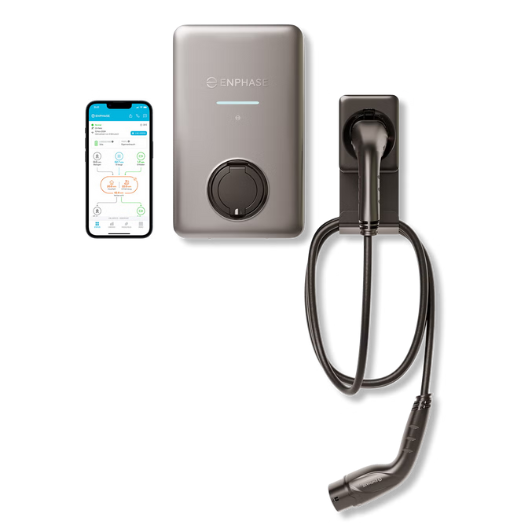
Enphase brings the same reliability they’re known for in solar energy to electric vehicle charging. Their chargers integrate seamlessly with solar systems, allowing you to charge your vehicle directly from your rooftop panels—maximizing your energy independence and minimizing grid dependence. Perfect for Cyprus property owners already investing in renewable energy.
Key Features:
- Smart charging capabilities with mobile app control
- Solar integration for maximum savings
- Weather-resistant design built for Mediterranean conditions
- Energy monitoring and scheduling options
- Compatible with all Type 2 EVs sold in Cyprus
KSTAR EV Chargers in Cyprus
KSTAR delivers robust, commercial-grade charging technology at competitive prices. Their chargers are engineered for durability and efficiency, making them perfect for both residential installations and commercial applications across Cyprus.
Key Features:
- Fast charging capabilities (7kW to 22kW models)
- RFID access control for commercial properties
- Dynamic load balancing
- IP65 weatherproof rating
- CE certified with comprehensive warranty coverage
Why Choose CGP Solar for EV Chargers in Cyprus
✅ Authorized Distribution Partner
As official distributors of Enphase and KSTAR in Cyprus, we provide genuine equipment with full manufacturer warranties and direct technical support. No grey imports, no compatibility issues.
✅ Complete Installation Service
Our certified electricians handle everything: site assessment, electrical upgrades (if needed), installation, testing, and certification. We ensure compliance with Cyprus Electricity Authority (EAC) requirements and all relevant safety standards.
✅ Solar Integration Expertise
Already have solar panels? We specialize in integrating EV chargers with existing solar systems, maximizing your self-consumption and reducing electricity costs. Charge your vehicle directly from your roof—the most cost-effective charging solution available in Cyprus.
✅ After-Sales Support
Local support team, spare parts availability, and maintenance services across all major Cyprus cities. When you need help, we’re here—not at the end of an international phone line.
✅ Government Subsidy Assistance
We guide you through Cyprus’s EV charging subsidy applications, ensuring you receive maximum financial support. Our team handles the paperwork complexity so you don’t have to.
Government Incentives for EV Chargers in Cyprus
Photovoltaic (PV) Systems for EV Charging
The Cyprus government provides financial incentives for the installation or extension of photovoltaic systems for charging M1 category electric or plug-in hybrid vehicles. This scheme is part of the broader efforts to promote renewable energy sources and sustainable transportation.
Mandatory Investment:
Installation (or extension) of a photovoltaic system for charging an M1 category electric or plug-in hybrid vehicle.
Optional Investments Subsidised:
Purchase/installation of a charger
Conversion of the electrical installation of the house from single-phase to three-phase
Purchase/installation of a battery for storing the energy produced by the PV system
Grant Amounts:
Mandatory Investment:
€750 per kW of PV to be installed
Maximum grant per vehicle: €1,500 (up to 2kW per vehicle)
Optional Investments:
Purchase/installation of charger: €600
Conversion to three-phase: €450
Purchase/installation of battery: €750 per kWh capacity (maximum sponsorship amount per application: €2,000)
Application Deadline:
Applications can be submitted until 20/12/2025 or until the exhaustion of the available budget
For more information, visit the official Grant Scheme for the Installation of Photovoltaic Systems for Charging of Electric and Plug-In Hybrid Vehicles (2022).
Ready to power your electric vehicle smarter, safer, and more efficiently? Contact CGP Solar today for a consultation and discover the best EV chargers in Cyprus tailored to your home or business. Our team will help you select, install, and maintain your system, ensuring long-term savings and sustainability.
Frequently Asked Questions About Solar Inverters in Cyprus
Charging time depends on your charger power and vehicle battery size. With a typical 11kW home charger, most electric vehicles fully charge in 4-8 hours—perfect for overnight charging. A Nissan Leaf (40kWh battery) needs about 4-5 hours, while a Tesla Model 3 (60kWh) requires 6-7 hours. For commercial 22kW chargers, these times are roughly halved. DC fast chargers (50kW+) at public stations can deliver 80% charge in 30-45 minutes, though these are primarily for emergency use rather than daily charging.
Installation costs range from €1,200-€2,900 depending on charger type and required electrical work. A basic 7kW charger with standard installation costs €1,200-€1,800. An advanced 22kW smart charger with solar integration costs €2,000-€2,900. Government subsidies reduce these costs by €1,100-€2,000, bringing final costs to €600-€1,900. Properties requiring electrical panel upgrades or extensive cable runs may incur additional costs of €300-€800, which our site assessment identifies upfront.
Absolutely—this is one of the most cost-effective approaches to EV ownership in Cyprus. Our solar-integrated EV chargers prioritize electricity from your rooftop panels before drawing from the grid. A typical 6kW solar system generates enough excess energy to provide 100-150km of daily driving range at near-zero cost. This reduces charging costs by 70-85% compared to grid-only charging. CGP Solar specializes in unified solar + EV charging installations, ensuring both systems work together efficiently from day one.
Not necessarily. Most Cyprus homes have single-phase electrical connections, which support chargers up to 7kW without modifications. This provides full overnight charging for virtually all electric vehicles. If you want an 11kW charger, some properties can support this on single-phase with minor upgrades. Three-phase electricity is only required for 22kW chargers, which are typically used for commercial applications or properties with multiple electric vehicles. Our technical assessment determines what your property can support and recommends appropriate solutions.
Electricity costs in Cyprus currently range from €0.30-€0.50 per kWh depending on consumption tiers. For an average electric vehicle with 15kWh/100km consumption, driving 100km costs approximately €4.50-€5.50 with grid electricity. Monthly costs for typical driving (1,500km) are €45-€65. By comparison, petrol vehicles covering the same distance cost €170-€220 monthly—a savings of €1,500-€2,100 annually. With solar charging, costs drop to €4.50-€5.50 per 100km, providing annual savings exceeding €2,300 compared to petrol.
We are authorized distributors of Enphase and KSTAR EV chargers in Cyprus. Enphase brings advanced solar integration capabilities and smart charging features—ideal for properties with existing or planned solar installations. KSTAR offers robust, commercial-grade charging solutions with excellent reliability at competitive prices. Both brands are CE certified, weather-resistant for Cyprus conditions, and backed by comprehensive warranties.
Yes, the Cyprus government provides substantial subsidies for EV charging infrastructure. Residential installations receive €1,100 for 3.7kW chargers and €2,000 for 7-22kW units—covering up to 50% of total installation costs. Commercial DC fast chargers qualify for €7,000-€20,000 subsidies. Applications are processed through the Ministry of Energy, Commerce, and Industry. CGP Solar assists clients with complete subsidy applications, preparing all required technical documentation and ensuring maximum financial support. The application-to-approval process typically takes 6-8 weeks.
Yes, though it requires coordination with your building management and potentially other residents. We install chargers in apartment parking areas across Cyprus, with solutions ranging from individual dedicated units to shared infrastructure. For shared parking, we recommend chargers with RFID access control to track individual usage. Installation typically requires written approval from building management and may need a general assembly decision if electrical upgrades affect common areas.
Installation costs range from €1,200-€2,900 depending on charger type and required electrical work. A basic 7kW charger with standard installation costs €1,200-€1,800. An advanced 11kW smart charger with solar integration costs €2,000-€2,900. Government subsidies reduce these costs by €1,100-€2,000, bringing final costs to €600-€1,900. Properties requiring electrical panel upgrades or extensive cable runs may incur additional costs of €300-€800, which our site assessment identifies upfront.
EV chargers are remarkably low-maintenance devices. We recommend annual inspections that include visual equipment checks, cable testing, software updates, and cleaning. Beyond this, chargers typically operate trouble-free for years. The most common maintenance need is cable replacement due to physical damage (driving over cables, door closing on cables), which costs €150-€250 depending on cable length. Both Enphase and KSTAR chargers come with 2-3 year warranties covering manufacturing defects. Our local support team handles any issues quickly, with most service calls resolved within 24-48 hours.
All EV chargers we install use the Type 2 connector standard—the universal charging interface for electric vehicles sold in Europe and Cyprus. This means your charger works with every EV brand available here: Tesla, Nissan, Hyundai, BMW, Volkswagen, Kia, Mercedes, and all others. The only exception is older Tesla Model S and Model X vehicles with Type 2 modified connectors, which work perfectly with an adapter (usually included with the vehicle). Our chargers are future-proof as the Type 2 standard will remain in use for all passenger EVs in coming years.
We are always ready to help
Visit our show room:
Working hours:
- Mon-Fri 07:30 - 18:00
- Sat 09:00 - 15:00
Get in touch:
Find us on:
