In stock
LiFePO4 lithium storage on CATL, EVE LFP cells. Single units from 5 kWh, stacked to 70 kWh.
Before the specifications
Midday surplus used to be sold to the grid cheaply and bought back expensively at night. A battery keeps it instead.
Evening is when a household uses most and produces nothing. That is exactly the gap a battery fills.
Daytime solar goes into the battery and comes back out when you plug in at night. No charging off the grid, and no waiting until noon to do it. Works with our EV chargers.
Without storage you put the washing on at midday and hope for sun. With it, appliances run when it suits you rather than when the roof allows.
When a battery is not the first thing to buy. If your panels barely cover what you use during the day, there is no surplus to store yet and the battery would sit half empty. Generation comes first: add panels, then storage once there is something to put in it. And if the inverter is being changed anyway, fit a hybrid inverter now, so the battery drops in later without changing the inverter a second time.
For a property standing empty most of the day, the surplus is exported rather than wasted, so the panels still earn on their own. Storage starts to pay once someone is there in the evening, or if you want chosen circuits alive through a power cut.
Tell us what you have and what you use. We will say which of the three you need, and in what order.
Before you order
Size it to what you use after the sun goes down, not to your daily total. During the day the panels feed the house directly, so the battery only has to carry you from sunset to sunrise. That is why most home battery storage in Cyprus ends up smaller than people first assume.
Take a year of EAC bills, divide by 365, then halve it. That is roughly your storage. Half is a fair rule here, more if the air conditioning runs at night.
|
Daily use
|
Storage needed
|
How you get it
|
What that covers overnight
|
Typical property
|
|---|---|---|---|---|
|
10 kWh
|
≈ 5 kWh
|
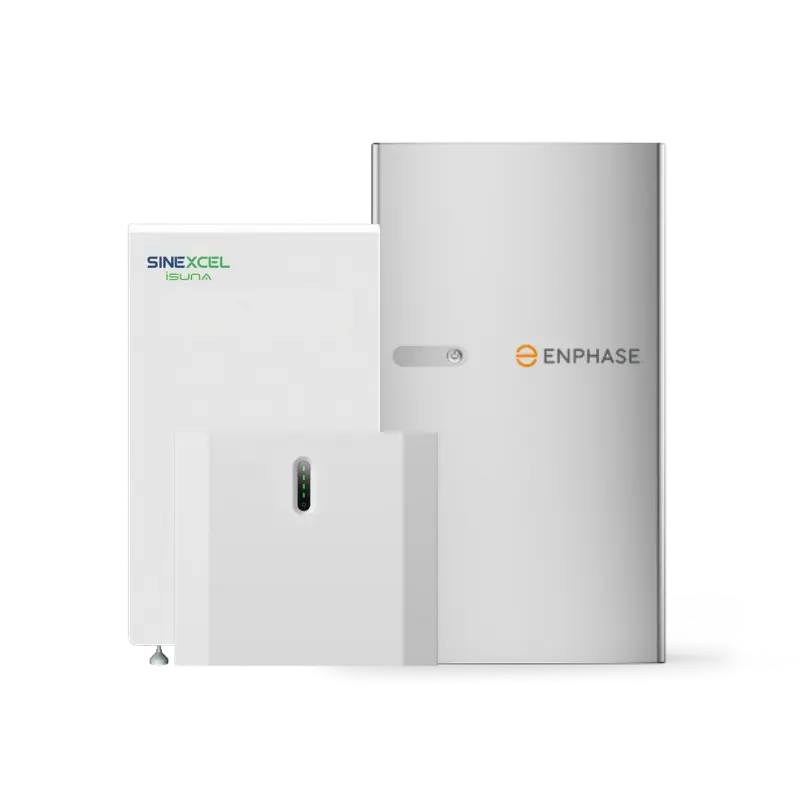
One KSTAR module, or one Enphase
|
Lights, fridge, TV and a normal cooking load
|
Apartment or small home, no air conditioning at night
|
|
20 kWh
|
≈ 10 kWh
|
Two modules stacked — 10.2 kWh
|
The above plus air conditioning through the evening
|
Family home
|
|
30 kWh
|
≈ 15 kWh
|
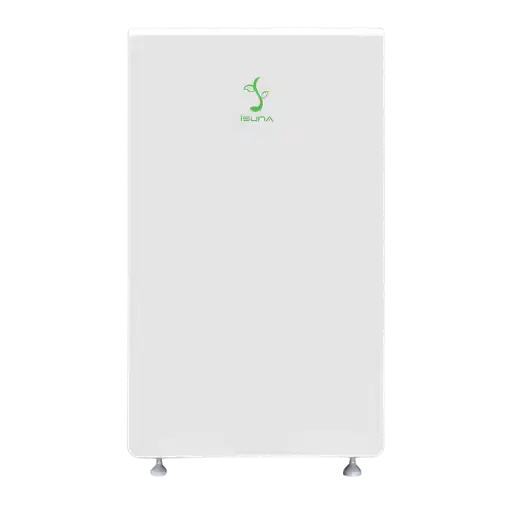
Three modules stacked, or Sinexcel Isuna 16 kWh
|
A full night including a pool pump cycle
|
Villa with a pool
|
|
40 kWh+
|
≈ 20 kWh+
|
Four modules or more on one inverter
|
Evening and overnight load on a larger property
|
Large villa, or a business running into the evening
|
Planning figures, not a quote. They assume roughly half your consumption falls after dark. Real sizing depends on your load pattern, your inverter, and how much panel capacity is filling the battery.
Too small and too big both cost you. Undersized, you start buying grid electricity before morning. Oversized, you pay for capacity that only fills on the sunniest days and sits idle the rest of the year.
The sum
It depends on your own electricity rates, so nobody can give you a number without seeing your bill. Here is how to work it out.
A battery keeps the gap between two prices
Buying electricity costs more than selling it. Say you pay 30 cents a unit in the evening, and get 5 cents back for what your panels send to the grid at midday. That is a 25 cent gap.
A battery keeps that 25 cents. It holds the midday surplus instead of selling it, and you use it at night instead of buying.
Your own rates will be different. Both are on your EAC bill. Once you have them:
Battery size in kWh × days it cycles × the gap = your yearly saving.
A battery fills and empties most days when the sun is out, so start with 250 to 300 days a year.
Worked example · 10 kWh battery
Using illustrative rates. Replace them with your own.
The rates above are examples, use the ones on your own bill. A battery only saves you money if there is surplus to store.
What changed in 2026
Until the end of 2025 the grid acted as a free battery, so buying a real one was hard to justify. That is no longer true, and there are now rules about how storage connects.
A kW you exported came back to you as a kW later. One for one.
You sell a unit cheap and buy one back at full price. Two prices, not one.
In April 2026 the EAC published its technical guide for connecting storage to the distribution system. It puts every installation into one of three categories. A home battery is Category A, and these are the parts that affect you:
Because Category A cannot export, the installation needs an energy flow sensor or smart meter to stop it happening. And blackout backup needs a grid-isolation switch, which is why it has to be designed in rather than added afterwards. Capacity itself is not limited — but the EAC expects it to match your evening consumption, which is the same conclusion the sizing section above reaches.
Read the full breakdown of the 2026 EAC storage rules, including Categories B and C for commercial and standalone systems.
On government grants: there are none open right now. The Photovoltaics for All scheme and the RES Fund grants for home solar closed to new applications on 31 December 2025, and no residential scheme has opened since. A battery subsidy tied to net billing has been announced in principle but has not launched.
When a scheme does open we will announce it on our net billing and grants page and on the blog. Ask us when you enquire and we will tell you exactly where things stand that week.
Worth knowing
Ask us, or ask whoever else is quoting you. The answers are what separate two batteries that look identical on paper.
Check this first
A hybrid inverter has a battery connection built in. A plain grid-tied inverter does not, and no ordinary battery will connect to it whatever you pay.
If that is your situation you have two options: an AC-coupled battery like the Enphase, which brings its own inverters and joins on the mains side, or a new inverter. Send us the model and we will tell you which applies.
Not all of it is usable
The number on the box is the rated capacity. What you can take out is lower. Lithium does well here: the KSTAR modules give 4.6 kWh of their 5.12 at 90% depth of discharge, and the Sinexcel gives 15.2 of 16 at 95%. An old lead-acid bank gave you about half before it started damaging itself.
A 10 kWh battery at 80% usable gives you less than an 8 kWh battery at 100%.
Ask for this number
Batteries wear out by use rather than by age. One cycle is a full charge and a full discharge, and a home battery normally does about one a day. Take the cycle rating and divide by 365 for a rough life in years.
Ask for that figure and the warranty behind it on anything you are comparing.
It matters more here
Choose where the battery goes before you choose which one to buy. A shaded wall with air moving past it, north side if the house allows.
That matters because heat shortens a battery’s life, and a closed Cyprus garage in August gets very hot. If there is nowhere cool, we build ventilated cabinets.
Every district · free delivery
We are based in Paphos and deliver across the island free of charge. We also ship to Europe on request.
Our district and our showroom. Villas at Chloraka, Kissonerga, Peyia and Coral Bay, and properties out at Polis and Latchi where supply is less reliable and backup matters as much as savings.
Apartments and villas at Germasogeia, Agios Tychonas and Amathus, plus the Krassochoria. Apartment installations need a wall that is yours and a route for the cabling.
The hottest summers on the island, which makes placement the first question rather than the last. Homes in Strovolos, Latsia, Aglantzia and Lakatamia, commercial premises across the Mesaoria.
Oroklini, Livadia, Pyla and Perivolia. Flat-roof solar is common here and batteries usually end up in a garage or utility room, so check the ventilation before choosing a size.
Hotels and apartments at Ayia Napa, Protaras and Paralimni, where evening demand runs high through the season. Farms across the Kokkinochoria running solar pumps outside daylight.
Stone houses and agritourism at Pano Platres, Arsos, Agros and Vavatsinia. A genuine off-grid solar battery setup needs more storage than a grid-connected house, because there is nothing to fall back on.
Buying from CGP Solar
Whichever route you take, delivery is free anywhere in Cyprus and any warranty claim is handled by our office in Paphos.
You know what fits and want the hardware. Add it to the cart above, we deliver free, your electrician fits it.
Route two
If your inverter cannot take a battery, specify both at once so they are matched. Our energy storage systems pair the two in one package.
About solar batteries in Cyprus
CGP Solar supplies solar batteries in Cyprus from our shop in Paphos. Everything below is general reference on home storage — what the numbers mean, how to size it and what to check — and applies whichever supplier you buy from.
Nearly every home battery sold here is LiFePO4, or lithium iron phosphate. It is one of several lithium chemistries, and the one that suits this climate: it runs cooler, tolerates high ambient temperatures better than other lithium types, and is inherently more stable. Older lead-acid banks needed ventilation, maintenance and gave up only about half their rated capacity before damage. Lithium batteries in Cyprus have replaced them almost entirely for that reason.
If you see a lithium battery advertised without the chemistry stated, ask. NMC and other lithium types exist and behave differently in heat.
People mix these two up. Storing your own daytime solar for the evening is what saves money. Backup is a different job: keeping the house running when the grid goes out.
Backup needs two things. An inverter with a backup output, and the circuits you want kept running wired into it. Most people only want the saving. If you want both, say so before we design the system, because adding it later means rewiring.
Price depends on capacity and on whether the battery has its own inverter built in. To compare two batteries of different sizes, divide the price by the capacity in kilowatt-hours.
Cost per kilowatt-hour is only part of it. Check the usable capacity against the rated capacity, the cycle rating, whether the battery needs an inverter you do not already have, and whether VAT and delivery are included.
Net metering ended in Cyprus on 31 December 2025 and net billing replaced it on 1 January 2026. Exported surplus now earns a wholesale rate while imported electricity is charged at retail. Storage is what closes that gap, which is why solar battery storage in Cyprus is a very different proposition now from what it was under the old scheme. A battery subsidy has been announced in principle but has not launched.
Two situations need more storage than a normal grid-connected home. A genuine off-grid system has nothing to fall back on, so it must carry several days of autonomy for cloudy spells. A backup system stays connected but keeps chosen circuits alive during an outage — which needs an inverter with a backup output, wired at installation rather than added later.
Investing in solar batteries in Cyprus is one of the best decisions you can make for energy independence, cost savings, and sustainability.
Our solar batteries are user-friendly and come with clear instructions for optimal operation. Need help? Our consultants are ready to assist you in choosing the right battery capacity tailored to your solar power system.
After experiencing the independence and cost savings our solar batteries provide, you’ll wonder how you ever lived without them.
Get a free consultation today!
FAQ’s
The cost of solar batteries in Cyprus depends on capacity, brand, and system integration. Prices start from €2,739 to €4,169, depending on energy needs. CGP Solar Energy offers customized battery solutions in Limassol, Nicosia, Paphos, Larnaka, Ayia Napa and beyond to fit different budgets.
Two stacked KSTAR modules give 10.24 kWh for €5,478, or two Enphase IQ Battery 5P units give 10 kWh for €6,958. Both prices include VAT and delivery. Neither comes as a single 10 kWh unit, so either route is two units side by side. Which one suits you comes down to your inverter: the KSTAR modules need a hybrid inverter, while the Enphase brings its own and works with the inverter you already have.
The right solar battery size depends on:
Most Cyprus homes land between 5 and 15 kWh.
Both are among the world’s largest cell manufacturers, and both make LiFePO4 cells. The cells decide how long a battery lasts and how safely it runs in the heat, so whose are inside is worth knowing. Read that alongside the depth of discharge, the cycle rating and the warranty.
Only if the system is set up for it. Backup during an outage needs an inverter with a backup output and the circuits you want kept alive wired to it. A battery alone does not do this. Say so at the design stage, because adding it afterwards means rewiring.
Yes, on the stackable ranges. The KSTAR modules take up to eight on one inverter, around 41 kWh. The Enphase IQ Battery 5P scales to fourteen units, 70 kWh. Starting with one and adding as your consumption changes. How many you can run depends on the inverter as well as the battery, so check the model with us first.
Lithium iron phosphate, the chemistry used in nearly every home battery sold here. It runs cooler than other lithium types, tolerates heat better, and gives you most of its rated capacity rather than half of it. In this climate the heat tolerance is the part that counts. It also needs no ventilation, topping up or maintenance, which lead-acid did.
Usually, and it comes down to the inverter. A hybrid inverter takes a battery directly. A grid-tied inverter with no battery support needs either an AC-coupled battery like the Enphase, which brings its own inverters, or an inverter change. Send us the make and model and we will tell you which applies.
LiFePO4 batteries are rated in cycles rather than years, one cycle being a full charge and discharge. A home battery typically does one cycle a day, so the cycle rating divided by 365 gives a rough life in years. The batteries here run from 6,000 cycles to 10,000 warranty.
Solar batteries require minimal maintenance. To maximize lifespan, customers should:
CGP Solar Energy is a trusted provider of solar batteries in Cyprus, offering:
✔️ High-quality lithium-ion batteries for homes and businesses
✔️ Professional installation and integration in Nicosia, Limassol, Larnaca, and beyond
✔️ Expert consultation to help you choose the right battery
Visit our show room:
Working hours:
Get in touch:
Find us on: